Showing posts with label Vatican II. Show all posts

Friday, November 14, 2014

Fifty Years of Dialogue, as Told by a Lutheran

By Rev. Donald J. McCoid

When I entered seminary in 1965, it became very evident that the Second Vatican Council was influencing theology, liturgy, and ecumenism for Catholics and for other Christians. What was changing was a new way to renewal in the church and an intentional opportunity to build relationships among Christians. With the establishment of the Pontifical Council for Promoting Christian Unity, there was a clear signal to other Christian communities that ecumenical conversations, dialogues, and relationships would be the direction for the future.

Through serious bilateral dialogues, much has been learned and much has been realized in the last 50 years. In Lutheran-Catholic dialogues in this country and with the Lutheran World Federation-Vatican dialogue, we have mutual faith agreements as a result of Vatican II. We are talking with one another, learning from one another and affirming that we hold much in common.

The bilateral dialogues have addressed subjects that would not have been touched before Vatican II. Common statements in the U.S. dialogues were developed and were widely distributed and embraced. They included: Scripture and Tradition; The Condemnations of the Reformation Era – Do They Still Divide?; The Status of the Nicene Creed as Dogma of the Church; One Baptism for the Remission of Sins; The Eucharist as Sacrifice; The One Mediator, the Saints and Mary; Teaching Authority, and the Joint Declaration on the Doctrine of Justification. This is a joint declaration on how we are forgiven and how we are saved. We are no longer saying to one another that one of us is going to hell … at least automatically because of our church affiliation.

As Catholics saw changes in church life and liturgy, so did Lutherans. As I grew up, it was the practice of most Lutheran congregations to celebrate Holy Communion only five or six times a year. There was a movement in the early sixties to increase this frequency to once a month and festivals. With a renewed understanding of the centrality of Word and Sacrament, the frequency has moved to the weekly celebration of Communion in most congregations. Along with this centrality around the Eucharist, liturgical renewal has also unfolded. The Prayer of Thanksgiving rather than the Words of Institution became the widespread practice. The use of Eucharistic vestments, musical settings, and increased lay involvement in the liturgy have been welcomed changes.

Vatican II most certainly influenced Lutheran churches in practices and in relationships with other Christians. Through dialogues, the Evangelical Lutheran Church in America (ELCA) has had 50 years of dialogues with Catholics, Orthodox and other Christians. We have full communion agreements with six Christian Churches (Episcopal, Moravian, Presbyterian, United Church of Christ, Reformed Church in America and the United Methodist Church). Vatican II opened the way to dialogues and relationships.

As members of the ELCA remember Vatican II, we remember what happened in the hearts and minds of Christians. There was a change in attitude, spirit, and cooperation that was born out of Vatican II’s commitment and call for unity and understanding. It was a change that was a gift of the Holy Spirit to Christ’s family, and the fruits continue to blossom.

Rev. Donald J. McCoid is director for Ecumenical and Inter-Religious Relations of the Evangelical Lutheran Church in America. This post is part of a series commemorating the 50th anniversary of Unitatis Redintegratio, the Decree on Ecumenism of the Second Vatican Council.

CNS Photo/L'Osservatore Romano via Reuters -- Pope Francis greets a delegation from the Lutheran World Federation at the Vatican in October 2013.

Friday, October 11, 2013

John XXIII and Francis: What They Do, But Also How They Do It

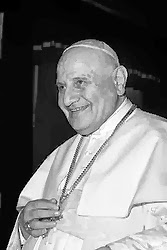
October 11 marks not only the anniversary of the Catechism and the opening of the Second Vatican Council, but the feast of John XXIII, the great instigator of Vatican II and one of two popes to be canonized April 27 of next year by Pope Francis.

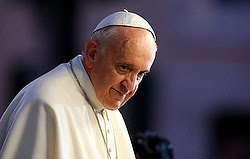
John XXIII hold the respective distinctions of ushering in the most significant reforms the Catholic Church had seen in a millennium and being the first Latin American and Jesuit pope. But both men are also witnesses to how Christian holiness permeates daily life in moments big and small and that it's not just what a person does, but how he or she does it, that matters.

Sure, both men provide visions of The Big Picture. John XXIII gave his recipe for sustainable global peace in his final encyclical Pacem in Terris (1963). And Pope Francis has put in place with lightning speed his program of global solidarity and a Church that goes out to the margins to serve.

But Francis has also focused much of his preaching and teaching energy -- exemplified by his daily Mass homilies especially -- on the "small things," behaviors of everyday life like gossip, laziness and cynicism. These are not lofty theological concerns, but pitfalls of human behavior that apply to everyone. And he doesn't criticize them lightly. Often the devil gets dragged into it. It's as if the last thing Pope Francis wants is a Church that "believes correctly" but is populated by otherwise miserable people.

While this may sound like "papal micromanaging" to some, it's more like a cheat sheet for the Christian life. Yes, you know the 10 Commandments and the Catechism, but just in case there was any doubt, the end result should look like this...

John XXIII had his rules for dealing with the small stuff too. His famous managerial maxim (recently quoted by Pope Francis in his interview with the world's major Jesuit journals) was "See everything. Overlook a great deal. Correct a little." His guide to living together in harmony (attributed to St. Augustine) had a similar spirit: "In essentials, unity. In doubtful matters, liberty. In all things, charity."

Pope John's leadership style was on full display at the Council. He didn't participate, wishing to promote freer discussion among the bishops, but watched the proceedings from his apartment on closed circuit television. However, when the curia proposed a highly unpopular draft for the document on divine revelation and the bishops did not have quite enough votes to reject it outright, Pope John, to the Council fathers' surprise, intervened and threw out the draft. He didn't see the point in such an unpopular schema taking up so much of the Council's time and energy. See everything. Overlook a great deal. Correct a little.

Pope Francis exercised a similar sense of discernment and freedom in the act of moving ahead Pope John's canonization without the required second miracle. Look at the witness of his life! The world has already proclaimed him a saint! This system was meant to guide us, not hinder us. Pope Francis seems to be saying. And he is, after all, the pope.

From the model of John XXIII to the current admonitions of Pope Francis, Catholics everywhere can learn from these men how to discern what is truly important in matters large and small and learn follow their lead in in exemplifying the key to a Christian witness: "See how they love another." Both men extended that love, in word and deed, to the entire world.

(Photo of Pope Francis CNS Photo/Paul Haring. Photo of John XXIII CNS file photo.)

Monday, September 30, 2013

John XXIII and JPII: Two Saintly Points on the Church's Trajectory

It's easy to note the distinctions between John XXIII (1958-1963) and John Paul II (1978-2005), two popes we now know will be canonized on April 27, 2014.
John XXIII was the good-humored roly poly son of Italian peasants; John Paul II was the handsome, sturdy Polish athlete and actor. John XXIII's brief pontificate "opened the windows" and sparked the most sweeping reforms in the modern history of the Church; John Paul II's quarter century on Peter's chair saw a highly visible pontiff playing a part in the fall of Communism and calling for a strident defense of Catholic teaching in the face of secular culture.

But these aren't so much differences as a reflection on how God gives us different gifts for different times. And what unites these two popes is how they both played critical roles at two different points on one trajectory: the Church in the modern world. We can see this is numerous areas:

Travel: John Paul II will always be remembered for his record-shattering
globetrotting, going on nearly 200 trips over 26 years, pioneering World Youth Day and bringing the papacy to nearly every corner of the globe. But it was John XXIII who first broke the practice of the pope as "prisoner of the Vatican," which had endured for decades. While he never traveled outside Italy as pope, John rode the rails from Rome to Assisi to pray for the success of the Second Vatican Council. Pope Francis has already followed the lead of JPII with his memorable time in Rio de Janeiro for World Youth Day. He's also traveling to Assisi in early October to pray for the success of a new round of Church reforms.

Laws and teachings: When John XXIII made his surprise announcement on January 25, 1959, at the Basilica of St. Paul Outside the Walls, he not only called for an ecumenical, but also for a synod for the Diocese of Rome and a revision to the 1917 Code of Canon Law. John would live to open the Council on October 11, 1962, but the revised Code of Canon Law would not be promulgated till nearly 20 years after his death, on January 25, 1983. In both cases, the Council and the Code, John and John Paul fit the respective roles of instigator and codifier.

Other Christians: Well before Vatican II issued its degree on ecumenism, Unitatis Redintegratio, in 1964, John XXIII had begun the thaw between the Catholic Church and other Christians. His jovial manner made him a natural at this, and in terms of rhetoric, he replaced "heretics and schismatics" with "our separated brethren" when referring to Christians who'd been divided from the Catholic Church for centuries or, in the case of the Eastern Orthodox, a millennium. Representatives of these groups were invited as official observers to the Council, and one of the long range goals of Vatican II was to promote Christian unity. John Paul II made a major contribution to the cause with his 1995 encyclical Ut Unum Sint, in which he invited non-Catholic Christians to dialogue with him about how the ministry of the pope could be exercised in a way that promoted unity between them.

Other religions: The good will surrounding the Council didn't stop with other Christians, of course. Its final document, Nostra Aetate (1965), affirmed the good of numerous world religions, including the Catholic Church's special relationship with the Jewish people. John XXIII had pushed for such a declaration. In his short pontificate, he had stunned a Jewish delegation by telling them, "I am Joseph, your brother," and removed language offensive to Jews from the Good Friday prayers. John Paul II made the first official papal visit to a synagogue in 1986 and, the same year, led a historic interfaith day of prayer in Assisi for world peace.

Communications and Charisma: Finally, both John XXIII and John Paul II exemplified how the personality of a pope can work wonders in spreading the Gospel in the mass communications age, whether at the dawn of the television era or spanning a time from the rise of cable news to the advent of the Internet and social media. Both men showed the world the face of a loving universal pastor. Now, in canonizing both men, Pope Francis is affirming the journey the Church has taken over the last 50 years and holding up two distinct, yet complementary models of holiness as we journey into the future.

(Photo of John XXIII CNS File Photo, photo of John Paul II CNS Photo/Joe Rinkus Jr.)

Sunday, July 7, 2013

John XXIII and John Paul II: New Models for Holiness


By Sister Mary Ann Walsh

Friday morning’s stories about Lumen Fidei, the first encyclical from Pope Francis, quickly yielded top news report to the Vatican announcement that Pope Francis will declare Pope John XXIII and Pope John Paul II saints. The Vatican spokesman suggests it could happen within the year.

Saints show us how to live. Making it to the papacy is less a criterion for sainthood than leading a life of holiness that others can imitate. The holiness of Angelo Roncalli and Karol Wojtyla started way before their papacies.

Angelo Roncalli, as Pope John XXIII, had vision that showed in calling the world’s bishops together for the Second Vatican Council, 1962-1965. Vatican bureaucrats couldn’t believe the man who was elected pope when he was 77 was serious – they figured him for a do-nothing interim leader. (Worth pondering: Pope Francis was elected at 76. What will he do?) John XXIII didn’t see the Council conclude, but he still launched one of the most important modern-day events. Vatican II urged the Church to see it had a role in society, not apart from it. It prompted Catholics to move from spectators to participants in the Church. But the pope’s greatness showed even earlier.

Archbishop Roncalli had represented the pope as nuncio to Istanbul and later to Paris. In Turkey he worked closely with the Muslim and Jewish communities, forging bonds that have continued to develop ever since. In Paris, he strengthened bonds with the Jewish community. As nuncio first in Istanbul, then in Paris during World War II he worked to save many Jews from extermination. If we achieve peace in our troubled world now it will be because of religious groups working together. The possibility for such began decades ago and included the work of this saint-to-be.

Blessed John XXIII came from a peasant family but had the courage of his convictions and the simple faith to see that God’s love did, and his love should, extend to all, whatever their religious persuasion.

Blessed John Paul II stunned the world when the Pole became the first non-Italian pope in 455 years. He was a young pope by papal standards when he was elected in 1978 at age 58. He had a vision too, one which stunned Vatican aides. He wanted to spread the Gospel through media and mobility. He met resistance when he said he would travel the world. It just wasn’t done, but he became the frequent-flyer pope on a Gospel tour. He visited people, especially poor people, all around the world. He traveled to Latin America, Africa, India, the Philippines, the Holy Land – and brought his press entourage with him – and via media, the pope highlighted poverty for the entire TV viewing world to see.

Yet his greatness also began before his election as pope. As a young man in World War II Poland, Karol Wojtyla dared to take risks – he studied for the seminary in the underground. As an archbishop in Poland, he faced down communism. He remained its fierce opponent as pope. In war-torn Poland, he formed friendships with his Jewish friends which laid the roots for him to make the first papal visit to a synagogue.

As pope, John Paul showed people how to live. When after Mehmet Ali Agca nearly killed him in an assassination attempt in St. Peter’s Square, the pope visited him in jail and forgave him. Years later, Pope John Paul showed people how to die when he let the world witness the intimate moments of his passing away. The millions at his funeral chanted “sainthood now,” dismissing protocols for any waiting period.

Soon two modern figures will be declared saints. Both were popes, but the seeds of saintliness showed long before their elections.


Friday, January 18, 2013

Seven Markers on the Road to Christian Unity

By Father John Crossin

The Week of Prayer for Christian Unity is January 18-25. With an estimated 41,000 denominations in Christianity today, it's certainly worth praying for. Such prayer goes back to the example of Christ praying "that they all may be one" at the Last Supper (John 17:21). God has answered this prayer, and continues to answer it, if incrementally, with every new development in various ecumenical dialogues around the world. Each is another step on the road to Christian unity. Here are seven significant markers along that road:

1. Vatican II opens the door. With its 1964 decree on ecumenism, Unitatis Redintegratio (Restoration of Unity), the Second Vatican Council launched the Catholic Church on its current trajectory of dialogue and seeking increased understanding with other Christians. While the broader ecumenical movement began earlier in the 20th Century, this was where Catholics officially entered the story. The dialogues kicked off in its wake continue at the global, national and local levels today.

2. East and West begin their thaw. After a fruitful meeting in 1964, Pope Paul VI and Ecumenical Patriarch Athenagoras I declared in 1965 that they were lifting the mutual excommunications of 1054 that symbolized the official split between the Catholic and Orthodox churches, one of the oldest rifts in Christianity. Five years later, Pope Paul and Patriarch Athenagoras even considered a proposal to concelebrate the Eucharist. That plan never came to be, but the desire for unity by both parties remains an example.

3. 'Justification' question no longer divides. By the end of the 20th Century, Catholics and Lutherans had almost 500 years of experience in caricaturing what the other believed on the question of how people are justified before God. (Cardinal Francis George of Chicago explains it brilliantly in this video.) While Catholic and Protestant theologians had worked towards a convergence on this issue for decades, and early progress on this point had been made by the Catholic-Lutheran dialogue in the United States, it was the 1999 Joint Declaration on the Doctrine of Justification that finally took the issue off the table as a point of division. In 2006, the Methodists joined Catholics and Lutherans in signing the agreement.

4. The Ravenna Statement. Meeting in Ravenna, Italy in 2007, international Catholic and Eastern Orthodox delegations explored questions of authority and its exercise in the Church. The dialogue issued a statement that agreed the bishop of Rome held a place of honor among bishops in the ancient Church, and that he should also exercise some sort of primacy in the Church today. Cardinal Walter Kasper, the lead Vatican representative, called this a "breakthrough," but acknowledged that much more dialogue was necessary.

5. A road map emerges. In 2010, the North American Orthodox-Catholic dialogue issued an agreed statement that provided an unprecedented practical picture of what unity between East and West would look like and steps the two churches could take to reach that point. The document recommends collaboration on shared pastoral challenges, joint prayer and social ministry and a mutual recognition at all levels that Catholics and Orthodox belong to "sister churches."

6. Agreement on baptism. Back on the Protestant side of ecumenism, in 2010, the Catholic-Reformed dialogue (which includes the Christian Reformed Church in North America, the Presbyterian Church-USA, the Reformed Church in America and the United Church of Christ) reached a Common Agreement on Baptism, including a common formula of using flowing water and invoking the Father, Son and Holy Spirit. Practically speaking, this agreement resolved issues that stood in the way of fully recognizing each other's baptisms.

7. Next steps. On January 28-29, the next round of the Catholic-Reformed dialogue will begin to explore the 1995 encyclical Ut Unum Sint (That They All May be One). In that encyclical, Pope John Paul II highlighted the papacy as a ministry of unity (for instance, all Catholics are said to be in communion with the bishop of Rome, and even the title Pontifex Maximus means "chief bridge builder"). He called on other Christian denominations to dialogue with him about how he could exercise this ministry in a way that would promote a broader unity among all Christians. A pope for Protestants too? The Holy Spirit has brought greater surprises.

Father John Crossin is executive director of the Secretariat for Ecumenical and Interreligious Affairs of the U.S. Conference of Catholic Bishops.

Monday, November 19, 2012

The Council at 50: The Priest: Ever Growing for His People


Welcome to one of the series of blogs on the Second Vatican Council. Each piece reviews one of the 16 documents produced by the Council Fathers during the extraordinary occasion in Church history. Vatican II, which drew together the world’s bishops, opened fifty years ago in St. Peter’s Basilica, October 11, 1962.

(Courtesy of Catholic News Service)

The qualities of today’s priest stood out in Presbyterorum Ordinis (of the Order of Priests), the “Decree on the Ministry and Life of Priests” promulgated December 7, 1965 by the Second Vatican Council.

The decree highlighted the call to preach the Gospel to all people as the “first task of priests.” The Council refocused the Church on the centrality of the Word of God and raised the Liturgy of the Word to greater prominence within the Mass. Since then, priests have worked to improve the quality of preaching to move the hearts of both priest and the faithful to conversion and a more dedicated fidelity to Jesus Christ.

The “Decree on the Ministry and Life of Priests” speaks of priests as the “indispensable helpers and advisers” of the bishops in the ministry of teaching, sanctifying and shepherding the People of God. Since this decree, the Church has developed the Presbyteral Council, a group of priests chosen by the bishop to advise him in diocesan matters.

The most important development occurred with Pope John Paul II’s Apostolic Exhortation I Will Give You Shepherds. The pope wrote that within the Church, the priest is a “man of communion.” This phrase captures the heart of priesthood: a man in communion with God who is called to become a mediator of this relationship, bringing God to people and people to God. This happens in many ways, and especially at Mass. As a man of communion the priest also is called to become “a man of mission and dialogue.” Priesthood is never simply about the priest. It is about mission – carrying the message of Jesus Christ into a world hungry for meaning and purpose. It is about dialogue – bringing people within the Church and outside of it into community. The priest is to be a man of witness and a man of peace.

The “Decree on the Ministry and Life of Priests” called for the Church to engage in the “progressive formation” of priests. Since then, a great deal of vision and effort has gone into the formation of priests after their ordination. Blessed John Paul spoke with eloquence on this need for the ongoing formation of priests quoting St. Paul in his Second Letter to Timothy: “I remind you to rekindle the gift of God that is within you.”  The U.S. Bishops promulgated the Basic Plan for the Ongoing Formation of Priests in June 2000 to implement the pope’s vision for the renewal of priests here in the United States.

This “rekindling” must happen in several areas. The priest is called to grow in human formation, the decree said, “to develop and sharpen his human sensitivity” to understand the needs and unvoiced questions of his people. He needs spiritual formation, to deepen his relationship to the Father through the Son and in the Holy Spirit. He needs intellectual formation to be an ongoing student of Scripture, theology, and the culture in which he lives. And he needs on-going pastoral formation to help him grow in his pastoral charity, exercising a shepherd’s care for his people. In other words, he is to grow in the virtue of love.

Each priest is called to engage in this formation as a young, middle-age, or older priest.

Finally, “The Decree on the Ministry and Life of Priests” calls priests once again to imitate Jesus the Master: They are to serve and not be served. They are called to improve their ability to listen before they speak. This humility is central to the spirituality of the priesthood and is an ever-present challenge to any attitudes of superiority or pride. Clericalism has no place in a Church that seeks to evangelize – to bring Christ and his love to the world.

---

Archbishop Robert Carlson of St. Louis chairs the U.S. bishops’ Committee on Clergy, Consecrated Life and Vocations.


Thursday, November 8, 2012

The Council at 50: Relations with Jews, Muslims, Hindus, Buddhists: How To Come Together


Welcome to one of the series of blogs on the Second Vatican Council. Each piece reviews one of the 16 documents produced by the Council Fathers during the extraordinary occasion in Church history. Vatican II, which drew together the world’s bishops, opened fifty years ago in St. Peter’s Basilica, October 11, 1962.


(Photo courtesy Catholic News Service)

Among controversial topics at the Second Vatican Council was how the Church should approach people of faith who are not Christians. The Council Fathers asked what is the meaning of other religions and what is their value for Catholics? This became the subject of the “Declaration on the Relation of the Church to Non-Christian Religions,” known as Nostra Aetate (In Our Age), finalized in 1965. 

The Fathers first focused on the common human search for meaning: the purpose of existence, the meaning of suffering, the road to true happiness. They then got specific, starting with words of respect for both Hinduism, whose adherents “contemplate the divine mystery” while seeking freedom from suffering through ascetical practices or profound meditation, and Buddhism, whose followers “realize the radical insufficiency of this changeable world” and seek to find “supreme illumination.” These and other religions, the Fathers asserted, seek to ease the restless the human heart through teachings, rules of life and sacred rites.

“The Catholic Church rejects nothing that is true and holy in these religions,” the Council taught. “She regards with sincere reverence those ways of conduct and of life, those precepts and teachings which, though differing in many aspects from the ones she holds and sets forth, nonetheless often reflect a ray of that Truth which enlightens all men.” 

The document called for intense dialogue and collaboration with the followers of these religions. Pope Paul VI had already established in 1964 a Secretariat for Non-Christians, known after 1988 as the Pontifical Council for Interreligious Dialogue. Their dialogues and contacts don’t aspire to achieve full unity as is the case with other Christians, but seek to establish relationships of trust and efforts to address together problems we all face.

Nostra Aetate also examines the Church’s attitude towards Islam. It speaks of the Church’s esteem for Muslims and lists positive elements in their life and teaching. They adore one merciful and all-powerful God, and strive to submit to Him. They do not believe that Jesus is God, but revere him as a prophet. They honor Mary, the mother of Jesus, await the Day of Judgment and the resurrection of the dead. They have high moral values and worship God through prayer, almsgiving and fasting. Even though there is a long history of hostility between Christians and Muslims, the document “urges all to forget the past and to work sincerely for mutual understanding,” social justice, peace and freedom. 

In the United States three regional Catholic-Muslim dialogues work towards goals the Council set. They have issued texts on such matters as the sources of revelation and marriages between Catholics and Muslims. This is a difficult relationship givrn the geopolitical situation today, but the dialogues are making progress.

The Declaration reserved the most space for the Jews. Indeed, the Church has much more in common with the Jews than with any other religion. The Church received the revelation of the Hebrew Scriptures through the people with whom God concluded the Ancient Covenant, and the Apostles and most of the early disciples were Jews. Even if most Jews did not accept the Gospel, God still holds them “most dear” and “does not repent” of the gifts he has given them. 

Nostra Aetate rejects any notion that all Jews were responsible in the past, or any Jews today, for the death of Jesus. Moreover, the Jews cannot be understood as rejected or cursed by God, and so anti-Semitism in all its forms is utterly rejected. This has led to a vast improvement in relations between the two groups, and at a historic visit to the Rome Synagogue in 1986, Pope John Paul II referred to them as our “elder brothers” in the faith of Abraham. In the U.S. we have two dialogues with the Jewish community, one with the National Council of Synagogues, and one with the Orthodox Union and the Rabbinical Council of America. Misunderstandings may arise, but the relationship to the Jews today is light years away from what it was before the Council. 

---

Bishop Denis Madden chairs the U.S. bishops’ Committee on Ecumenical and Interreligious Affairs.

Monday, November 5, 2012

The Council at 50: Vatican II on Communications: Speaking to the World


Welcome to one of the series of blogs on the Second Vatican Council. Each piece reviews one of the 16 documents produced by the Council Fathers during the extraordinary occasion in Church history. Vatican II, which drew together the world’s bishops, opened fifty years ago in St. Peter’s Basilica, October 11, 1962.


(Photo courtesy Catholic News Service)

 
A first decision the Fathers at the Second Vatican Council faced was whether to restrict themselves to internal church matters, such as liturgy, or to expand their mission to include what matters to the entire world. They chose the latter and opted to include within the Council’s scope the immense topic of social communications. The Fathers sought, they said, to speak on public communications in order to promote “not only the eternal welfare of Christians, but also the progress of all mankind.”

Inter Mirifica, the decree on social communications, takes its name from the first words of the document’s Latin (and official) version, which mean “among the wonderful.” It acknowledges the media’s awesome power for good or ill and heralds its potential for everything from uplifting people’s spirits through the arts to keeping them informed via news media to providing tools for religious education.

Given the explosion of media since the document was published in 1963, the message, though brief, was prescient. It spoke of “the press, movies, radio, television and the like” with “the like” having come to include the internet, Twitter, Facebook, YouTube, Pinterest and whatever other media lie on the horizon or beyond.

Inter Mirifica  spoke of a sense of morality to guide media use. It said people have “a right” to information and said the news communicated “should always be true and complete, within the bounds of justice and charity” and that how news is communicated “should be proper and decent.” The Council explained that “both in the search for news and in reporting it, there must be full respect for the laws of morality and for the legitimate rights and dignity of the individual.” It called on public authorities to guarantee freedom of information, describing it as “a freedom that is totally necessary for the welfare of contemporary society, especially when it is a matter of freedom of the press.” The words hold meaning now as the news business grapples with everything from wiretapping to leaks to manipulation of images.

Inter Mirifica also highlighted the role of other communications arts such as film and drama to help people understand evil in order to “reveal and glorify the grand dimensions of truth and goodness.” It called for “moral restraint” in such presentations “lest they work to the harm rather than the benefit of souls.” It offers guidance to producers as they decide how much violence they need to illustrate conflict or how much sexual intimacy to reveal to emphasize relationships.

The Fathers called on church authorities to develop quality media within its own walls. It spoke of the news media, saying, “a good press should be fostered,” involving both church officials and laity. It urged the church to prepare “literary, film, radio, television and other critics” to “put moral issues in their proper light.”

Inter Mirifica called for two specific actions at the Vatican to enhance mass communications. The first was to establish the Pontifical Council for Social Communications, the Vatican office that subsequently developed key Pastoral instructions,  Communio et Progressio (Unity and Advancement),1971, that emphasizes relationships with public media, and Aetatis Novae (At the Dawn of a New Era), 1992,  that looks at the inherent challenges presented by modern developments in media.  Inter Mirifica also called for an annual World Communications Day, reminding churches to celebrate their media locally. The Vatican has since used this occasion to address such contemporary topics as ethics in advertising, pornography and the digital age.

Inter Mirifica  posed a challenge that still faces the church when it recognized the difficulty and costs of providing quality media, but said this work is imperative, a matter of the soul of humanity.

“It is quite unbecoming for the Church’s children idly to permit the message of salvation to be thwarted or impeded by the technical delays or expenses, however vast, which are encountered by the very nature of the media,” the Council Fathers said. The challenge still stands before us.

---

Bishop John Wester of Salt Lake City chairs the Communications Committee of the U.S. Conference of Catholic Bishops.

#####

Thursday, November 1, 2012

The Council at 50: A Moral Imperative


Welcome to one of the series of blogs on the Second Vatican Council. Each piece reviews one of the 16 documents produced by the Council Fathers during the extraordinary occasion in Church history. Vatican II, which drew together the world’s bishops, opened fifty years ago in St. Peter’s Basilica, October 11, 1962.

 
(Photo courtesy of Catholic News Service)

“The joy and the hope, the grief and anguish of the men of our time, especially those of who are poor or afflicted in any way, are the joy and hope, the grief and anguish of the followers of Christ as well.”  Fifty years ago the Second Vatican Council opened Gaudium et Spes (Joy and Hope), “The Pastoral Constitution on the Church in the Modern World” with these powerful words.

The constitution defended the responsibility of the Church to read “the signs of the time,” “to teach her social doctrine,” and “to pass moral judgment even in matters relating to politics, whenever the fundamental rights of man or the salvation of souls requires it.”

Not only are Church leaders required to make moral judgments on social issues, but all Christians are called to action.  The Council reminded Catholics that they cannot pray one thing on Sunday and do another thing the rest of the week. “One of the gravest errors of our times is the dichotomy between the faith which many profess and the practice of their daily lives,” it noted.  

The Council Fathers called people to be faithful citizens of both the earthly city and the Kingdom of God. “Far from diminishing our concern to develop this earth, the expectancy of a new earth should spur us on….”

The constitution had a profound effect on the entire Church.  It led national bishops’ conferences, like the U.S. Conference of Catholic Bishops, to examine the “signs of the times” and “to pass moral judgment.” It led to lay involvement in a host of social causes from civil rights to poverty, from abortion to war and peace. The U.S. bishops’ pastoral letters, “The Challenge of Peace” and “Economic Justice for All,” stand as two examples of this rich heritage.

The gap between rich and poor is one of the “signs of the times” identified by the Fathers. They pointed out a paradox of modern life, and said that “Never has the human race enjoyed such an abundance of wealth, resources and economic power, and yet a huge proportion of the world’s citizens are still tormented by hunger and poverty, while countless numbers suffer from total illiteracy.” Although much progress had been made in five decades, too many of the world’s people remain in crushing poverty.  

To address inequality, the Council emphasized the participation of all in economic life.  Economic development "must not be left to the judgment of a few individuals or groups possessing too much economic power, nor of the political community alone,” Gaudium et Spes said. It defended the rights of workers against “exploitation,” including their right to organize unions. 

Warfare stands as one more critical sign of the times. The destruction caused by modern weapons compelled the Council “to undertake a completely fresh reappraisal of war.”

“Every act of war directed to the indiscriminate destruction of whole cities or vast areas with their inhabitants is a crime against God and man, which merits firm and unequivocal condemnation,” the Fathers said. This led the Church to work for a world without nuclear weapons.

The Council taught:  “Peace is not merely the absence of war.  Nor can it be reduced solely to the maintenance of a balance of power between enemies…. Instead, it is…an enterprise of justice.” 

There is a profound link between peace and justice. War robs the world of the resources to address poverty, and poverty and injustice increase violence. In the poignant words of the Council, “the arms race is an utterly treacherous trap for humanity, and one which injures the poor to an intolerable degree.”

Gaudium et Spes spurred a dramatic commitment to justice and peace among Catholics, a moral imperative that continues today.

---

Bishop Richard E. Pates of Des Moines, Iowa, chairs the Committee on International Justice and Peace of the United States Conference of Catholic Bishops.

#####

Wednesday, October 31, 2012

The Council at 50: Religious Liberty Major Worldwide Issue for Church Today


Welcome to one of the series of blogs on the Second Vatican Council. Each piece reviews one of the 16 documents produced by the Council Fathers during the extraordinary occasion in Church history. Vatican II, which drew together the world’s bishops, opened fifty years ago in St. Peter’s Basilica, October 11, 1962.


(Photo courtesy of Catholic News Service)


“The Vatican Council declares that the human person has a right to religious freedom.” This is the opening sentence of Chapter I of Dignitatis Humanae (Of Human Dignity), the Declaration on Religious Liberty, approved in 1965 by the bishops at the Second Vatican Council.

The first U.S. bishop – John Carroll, a cousin of Charles Carroll who signed the Declaration of Independence. favored religious liberty.  A century later, Cardinal James Gibbons of Baltimore advocated religious liberty in a landmark sermon he gave in Rome.  Jesuit Father John Courtney Murray, who is one of the few Catholic theologians to appear on the cover of Time magazine, wrote a series of articles prior to the Council which explored religious liberty systematically and deeply.

The Declaration on Religious Liberty began with the work of Cardinal Augustin Bea, S.J.  and his Secretariat for Christian Unity. Father Murray wrote two of its 12 drafts. Murray had devoted his life to showing the relationship of Catholic philosophy and theology to American thinking on religious freedom. His work and that of French theologians undergird the Declaration.

In the Declaration the Council Fathers

·         Held that the right to religious freedom “is based on the very dignity of the human person as known through the revealed word of God and by reason itself.” [2]

·         Declared that persons, “… are both impelled by their nature and bound by a moral obligation to seek the truth, especially religious truth.” [2]

·         Contended that “religious freedom should be given the fullest possible recognition and should not be curtailed except when and in so far as necessary.” [7]

·         acknowledged that “Although in the life of the people of God in its pilgrimage through the vicissitudes of human history there has at times appeared a form of behavior which was hardly in keeping with the spirit of the Gospel and was even opposed to it, it has always remained the teaching of the Church that no one is to be coerced into believing.” [12]

·         Noted that “The Church also claims freedom for herself as a society of men with the right to live in civil society in accordance with the demands of the Christian faith.” [13].

Dignitatis Humanae was approved overwhelmingly at the final session of the Council. Its approval was affected by the support of religious liberty by bishops from Communist Eastern Europe as well as U.S. bishops.

The document is singular in its importance and has had a sustained impact. Who can forget the robust calls for religious liberty by Pope John Paul II in the face of dictators during his travels?  Religious liberty has become a cornerstone of Catholic social ethics and action throughout the world.

The Declaration has sustained the Catholic pilgrimage toward full communion with our Protestant, Orthodox and Anglican sisters and brothers. As Cardinal Bea and other Council Fathers knew, without Catholic support for religious liberty, any attempts at ecumenical dialogue would ring hollow.

Dignitatis Humanae has enabled Catholic intellectuals to continue to probe the reasons for, the implications of and the limits to religious liberty. The work of John Courtney Murray is still being discussed four decades after this death.

The Declaration undergirds current efforts by Catholic bishops in the United States to challenge moves in various quarters to limit or redefine U.S. religious liberty and demands support for a robust definition of religious liberty. How interesting that the Catholic Church is now the prime promoter of religious liberty on the planet!

---

Archbishop William E. Lori of Baltimore heads the U.S. bishops’ Ad Hoc Committee for Religious Liberty.


Thursday, October 25, 2012

The Council At 50: All Are Missionaries


Welcome to one of the series of blogs on the Second Vatican Council. Each piece reviews one of the 16 documents produced by the Council Fathers during the extraordinary occasion in Church history. Vatican II, which drew together the world’s bishops, opened fifty years ago in St. Peter’s Basilica, October 11, 1962.
 
(Photo courtesy of Catholic News Service)
 

Fifty years ago, the Second Vatican Council issued Ad Gentes Divinitus (Divinely Sent to the Nations). This “Decree on the Church’s Missionary Activity” remains relevant today.  In it the Council Fathers made clear that are all “missionaries.”

When most of us think of “missionaries,” we picture priests, sisters and brothers going to far off lands to convert others to Christ. Most of us don’t look in the mirror and see a missionary, but we should.

The council decree aimed to “rally the forces of all the faithful.” Missionaries plant “the Church among peoples or groups who do not yet believe in Christ.” Given this reality, how can the rest of us, who do not go “forth into the whole world,” be missionaries? The decree stresses the answer is simple because missionary activity always occurs through personal example and acts of love that foster charity, justice and peace.
 
“For all Christians, wherever they live, are bound to show forth, by the example of their lives…that new man put on at baptism….  Thus other men, observing their good works, can glorify the Father...,” the decree said.

In the wake of Vatican II the church saw an explosion in the “lay apostolate.” Parishes established social ministry committees to engage all parishioners in service to those in need at home and abroad; individual Catholics got involved in civil rights, anti-poverty and peace movements. This apostolate received additional impetus from this sense of “mission” highlighted by the Council. That energy and engagement continues today and finds an outlet in charity that is motivated by unconditional love of everyone.

“Christian charity truly extends to all, without distinction of race, creed, or social condition: it looks for neither gain nor gratitude,” the decree states. “For as God loved us with an unselfish love, so also the faithful should in their charity care for the human person…with the same affection with which God sought out man.”

This love in action extends to “the poor and the afflicted” in a special way, and not just in charity, the Fathers said. Love impels us to promote peace and justice, the Council Fathers stressed as they proclaimed:  “Let Christians labor and collaborate with others in rightly regulating the affairs of social and economic life.”  “[L]et them take part in the strivings of those peoples who, waging war on famine, ignorance, and disease, are struggling to better their way of life and to secure peace in the world. In this activity, the faithful should be eager to offer prudent aid to projects sponsored by public and private organizations, by governments, by various Christian communities, and even by non-Christian religions.”

In this regard, the church in the United States can be particularly proud of the work of Catholic Relief Services (CRS). CRS provides humanitarian and development assistance to the poorest communities in about 100 countries.

CRS stands as a tangible expression of the “evangelizing mission” of the Church, not in the sense of converting people, but in the sense of helping people — all people — based on need, not creed.

Pope Paul VI in his Apostolic Exhortation, On Evangelization in the Modern World, amplified this aspect of the “Decree on the Missionary Activity of the Church.” Blessed John Paul II and Pope Benedict XVI reinforced this call for a “new evangelization” in which all Catholics have a role. 

“Between evangelization and human advancement — development and liberation — there are in fact profound links,”  Pope Paul said. Working to protect human life and dignity, especially of the poorest people, is part of the “new evangelization” that the whole Church embraces.

--------
Bishop Gerald Kicanas of Tucson is the chairman of the board of Catholic Relief Services.


Monday, October 22, 2012

The Council at 50: A New Way of Working for Bishops: Consultation


Welcome to one of the series of blogs on the Second Vatican Council. Each piece reviews one of the 16 documents produced by the Council Fathers during the extraordinary occasion in Church history. Vatican II, which drew together the world’s bishops, opened fifty years ago in St. Peter’s Basilica, October 11, 1962.
 
(Photo courtesy of Catholic News Service)

As bishops from around the world gather in Rome for the XIII ordinary Synod of Bishops, they can thank the Fathers of the Second Vatican Council for making the opportunity possible. The Synod of Bishops, established by Pope Paul VI prior to the conclusion of the Council, implemented the bishops’ desire for a permanent structure that would be available to the pope, as needed, to discuss important topics in the Church.  In this way, the pope could draw upon the experience and insights of bishops who exercise their ministry within different circumstances and conditions and make decisions that respond to the needs of the Church in the many countries where she exists.

The importance of consultation in the exercise of Church governance is a theme that echoes throughout Christus Dominus (Christ the Lord), the “Decree on the Pastoral Office of Bishops in the Church.” It was the Council’s hope that opportunities for consultation would continue to thrive at every level of the Church’s structure. If your diocese has celebrated a diocesan synod any time in the last two decades you have experienced this hope in action. You are even more likely to be familiar with the councils that exist on the diocesan and parish levels that provide regular opportunities for lay women and men, religious, priests, and deacons to offer their insights and expertise to their bishop or parish pastor to assist them in making decisions that benefit the common good. 

This very blog is a service provided by another consultative structure explicitly affirmed by the Decree, the episcopal conference. The bishops of the United States Conference of Catholic Bishops gather twice a year to discuss the pastoral needs of the nation and to offer mutual support for the exercise of their ministry as authoritative teachers, sanctifiers and pastors within their individual dioceses. Their cooperation and concern result in helpful initiatives that are best undertaken on the national level and that serve to strengthen the witness of the Catholic faith within the United States. The Decree encouraged bishops to utilize the media to promote the Church’s teaching. While the Council Fathers, in 1965, undoubtedly had in mind the print media – and perhaps also radio and television – their encouragements to adapt always to the changing needs of the times and to engage all of the means that are available to the Church continue to be relevant today.

A diocesan bishop’s ministry is most effective when it is carried out in collaboration with the auxiliary bishop(s), priests, and deacons, and with the cooperation of laity and religious. The bishop depends on their assistance to further the mission of the Church so that it is truly active and present throughout the diocese. This necessary collaboration and cooperation is enriched by the many and unique gifts that have been given by the Holy Spirit to the faithful in baptism and confirmation.

This brings us back to the Synod of Bishops meeting in Rome on the topic of the New Evangelization. The “Decree on the Pastoral Office of Bishops in the Church” has enabled the bishops to address together their concern for Catholics who may have fallen away from the regular practice of their faith or from belief in fundamental teachings of the Church. It facilitates bishops’ doing everything in their power to make certain that the needed activities of evangelization are supported and promoted by every member of the Church. We, therefore, await with anticipation the many insights and recommendations that the bishops who assembled from around the world propose to the pope as fruitful opportunities for the Church in our time.

---

Bishop Howard J. Hubbard heads the diocese of Albany, New York, and has been a bishop for 35 years.

Thursday, October 18, 2012

The Council at 50: Vatican II’s Word on the Word of God


Welcome to one of the series of blogs on the Second Vatican Council. Each piece reviews one of the 16 documents produced by the Council Fathers during the extraordinary occasion in Church history. Vatican II, which drew together the world’s bishops, opened fifty years ago in St. Peter’s Basilica, October 11, 1962.

(Photo courtesy Catholic News Service)


All documents are not created equal.  Of the 16 produced by the Second Vatican Council, only two got top-tier religious ranking:  Dogmatic Constitution. Those two are Lumen Gentium (On the Church) and Dei Verbum (On the Word of God).

In Dei Verbum (DV), the Council Fathers responded to common misunderstandings about the Church and the bible. The following five highlights show how they answered these challenges from the world.

1. Tradition:  People often ask why the Church puts faith in Tradition, especially if it’s not found in the bible.  Dei Verbum teaches that before the Word was written (Scripture), it was preached and lived. It is the preaching and deeds of the Apostles, which the Church calls Tradition. Scripture and Tradition, that cannot be separated. They are living and interconnected –
both expressions of Christ (cf. DV 7-10). 
Yet they cannot interpret themselves, and so Tradition and Scripture also have the successors of the Apostles, the bishops, to interpret them.  Dei Verbum gives us a tripod of Tradition, Scripture and teaching authority, “so linked and joined together that one cannot stand without the others” (DV 10).  Together, they lead securely to salvation with God.

2. DV affirmed the bible as inspired and therefore without error.  Some biblical scholars have tried to understand our world using only the power of human reason, leaving out faith or the supernatural – effectively sidelining God to the act of creation and then to heaven. They search for “natural” explanations for any mention of “supernatural” happenings in the bible. DV states that the whole bible, Old and New Testament, was “written under the inspiration of the Holy Spirit.”  Therefore, they have “God as their author,” (DV 11) who can act supernaturally.  DV affirms that  the bible must be read with faith as well as reason.  It states that the bible teaches “faithfully and without error” and is given to us “for the sake of salvation” (DV 11). 

3. DV’s embrace of humility in Scripture:  Just as God humbled Himself to become human in every way except sin, so the Word humbled itself to be written in human language in every way except error (DV 13). The humble appearance of God in Jesus is compared to the humble appearance of God in the written word.  Both require faith to see the divine in the human.  This means that just as people without faith failed to see Jesus as the Son of God, today people without faith will fail to see the bible (because of its humble nature) as inspired and without error.

4. Perhaps, the biggest development in DV states that the bible’s truth is expressed according to the “literary form” of each book or part.  Historical truth will be expressed differently from prophetic or poetic truth; and these “forms” follow the “time and culture” when they were written (DV 12).  DV also says that every line of Scripture has to be understood in relation to the bible as a whole, as well as in relation to the whole Tradition of the Church. The bible is a unity.

5. Lastly, DV shows a desire for dialogue and evangelization when it encourages translations of the bible for non-Catholics and even non-Christians. Such translations, it counsels, should include footnotes to explain the biblical verses in accord with the religious background of those reading it (DV 25).

---

Bishop Anthony Taylor of Little Rock, Arkansas is a member of the Subcommittee on Scripture Translations of the U.S. Conference of Catholic Bishops.

Monday, October 15, 2012

The Council At 50: The Search for Christian Unity


Welcome to one of the series of blogs on the Second Vatican Council. Each piece reviews one of the 16 documents produced by the Council Fathers during the extraordinary occasion in Church history. Vatican II, which drew together the world’s bishops, opened fifty years ago in St. Peter’s Basilica, October 11, 1962.

(Photo courtesy Catholic News Service)


When I was a boy, Catholics did not enter Protestant or Orthodox churches. We did not pray together except for an occasional prayer before a public event. Now, 50 years after the Second Vatican Council, we pray together regularly. This type of “spiritual ecumenism” is at the heart of our movement toward Christian unity.

The Council’s Decree on Ecumenism (1964)Unitatis Redintegratio ( Restoration of Unity), opened the doors of the church. The Council exhorted “all the Catholic faithful…to take an active and intelligent part in the work of ecumenism.” [Decree, #4]

We began to build relationships of trust and forgiveness with our Protestant and Orthodox neighbors. We became friends. We began to look together more honestly at the issues that divide us. The Council urged us to make “…every effort to avoid expressions, judgments and actions that do not represent the condition of our separated brethren with truth and fairness ….” [#4]

In formal dialogues and informal conversations we moved from mutual suspicion and some exaggerations to an honest search for the facts and the truth of the past. Often our perceived differences came from the preconceptions and emotions of times past and not from deep divisions.

Our renewed relationships led to practical collaborations. Today the local food pantry or soup kitchen is often sponsored by an ecumenical coalition of churches. Frequently we coordinate our international efforts to aid those in need so we might be more effective.

On the local level, we see Catholic parish Bible study groups. These did not exist in my youth. We see many Protestant churches celebrating the Lord’s Supper every Sunday.  Protestants have shared with Catholics their love for the Bible; Catholics have shared with Protestants their love for the sacraments.

Both the Vatican and the U.S. Conference of Catholic Bishops engage in scholarly dialogues with Protestant and Orthodox friends and colleagues. “Through such dialogue everyone gains a truer knowledge and more just appreciation of the teaching and religious life of both communions.” [#4]

One result of these dialogues was the Joint Declaration on the Doctrine of Justification, a carefully worded statement on the key theological issue of the Reformation that was agreed to by the Lutheran World Federation and the Vatican in 1999. Its central affirmation is: “Together we confess:  By grace alone, in faith in Christ’s saving work and not because of any merit on our part, we are accepted by God and receive the Holy Spirit, who renews our hearts while equipping and calling us to good works.” [Declaration, #15]  In 2006, the World Methodist Council signed the Declaration.

More recently representatives of many Orthodox churches and of the Holy See endorsed the Ravenna Statement on the church. This little-known statement about the sacramental nature of the church and its implications for church life and authority—local, regional and universal— was a breakthrough with significant implications for the unity of Eastern and Western Christians.

Of course, there’s still a “ways to go” and this challenges all Christians. We are just beginning to address ecumenically some of the “hot” moral issues of our times, such as questions of sexual morality. While we have substantial agreement on many moral issues, we need to dig down deeper into the causes of our divergences.

The work of ecumenism is slow but steady. We are touching the deep foundations of our lives. We all adjust slowly to change – even change for the better.

---

Bishop Denis Madden is chairman of the Committee for Ecumenical and Interreligious Affairs of the U.S. Conference of Catholic Bishops.