Showing posts with label ecumenism. Show all posts

Friday, February 5, 2016

Pope Francis, Patriarch Kirill and the God of Surprises

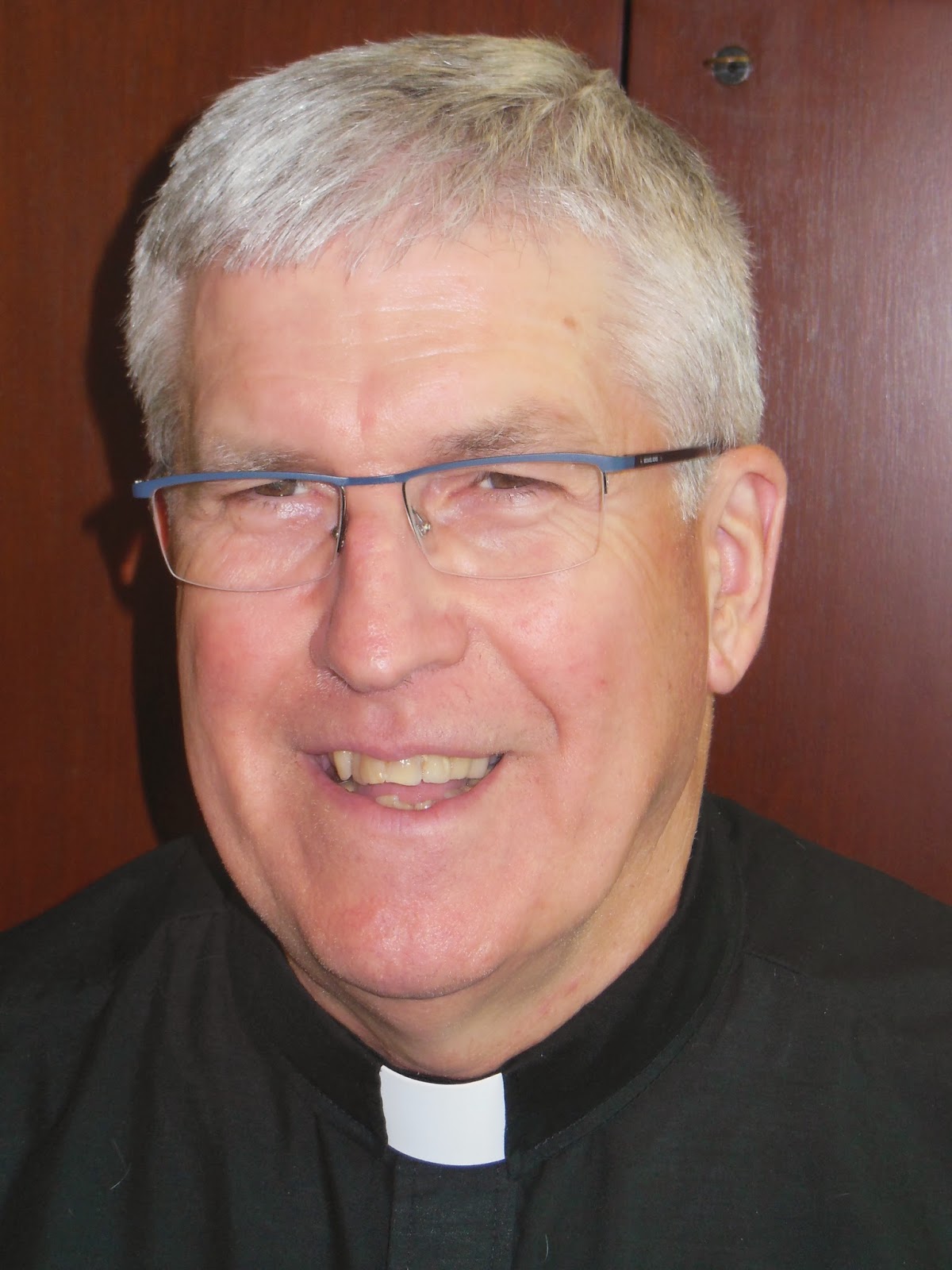
By Bishop Mitchell T. Rozanski

Once again Pope Francis reminds us that we worship the God of surprises. The news today that he will meet with Patriarch Kirill of Moscow in Cuba, February 12—while the pope is en route to Mexico—is literally unprecedented. A pope has never met with the head of the Russian Orthodox Church, and not for lack of wanting.

Patriarch Kirill is head of a Church of some 150 million people out of the 250-300 million adherents of Eastern Orthodox Christianity worldwide. Relations with Orthodox Christians—from whom Catholics officially split in the year 1054—are a crucial part of the Catholic Church's efforts toward Christian unity. Their faith tradition is ancient, and the Catholic Church recognizes their apostolic succession and validity of their sacraments. In the United States, Catholics and Orthodox have dialogued for 50 years, with Archbishop Joseph W. Tobin of Indianapolis currently stewarding this important work as Catholic co-chair.

Pope Paul VI and Ecumenical Patriarch Athenagoras make history in Jerusalem, 1964.
In 1964, the same year the Second Vatican Council issued its Decree on Christian Unity, Pope Paul VI met with Patriarch Athenagoras of Constantinople in Jerusalem, a turning point that ushered in a new era of dialogue and friendship after nearly a millennium of hostility and estrangement. The Patriarch of Constantinople, or Ecumenical Patriarch, is a first among equals of the leaders of Orthodox Christianity, and Popes John Paul II and Benedict XVI continued to build on this key relationship, meeting with subsequent Ecumenical Patriarchs. And Pope Francis has already met with Patriarch Bartholomew I (Ecumenical Patriarch since 1991) on several occasions.

Pope Francis walks with Ecumenical Patriarch Bartholomew I at Jerusalem's Church of the Holy Sepulchre, the site of the crucifixion and Jesus' tomb, in May 2014.
Since Orthodox Christianity is more collegial, i.e. more horizontal than vertical in its leadership structure, it is especially important to foster relationships with its other leaders. And here the Russian Orthodox Church has posed a particular challenge. The Russian Orthodox Church existed with a minimal degree of government recognition under the Soviets, but other believers, Catholics included, saw their religion virtually suppressed. The fall of Communism gave rise to tensions between the leaders of Catholicism and Russian Orthodoxy as the Churches moved to pick up the pieces.

Pope Benedict XVI meets then-Metropolitan Kirill in December 2007.
In the quarter century since then, the Vatican has worked delicately to improve relations with the Russian Orthodox Church, with pope and the patriarch sending delegates to meet one another on various occasions. But John Paul II died without achieving his dearly held goal of visiting Russia and meeting the Patriarch of Moscow. Now, not only is this meeting occurring, but strangely enough, it is not the first time Kirill will have met a pope. Prior to becoming Patriarch of Moscow in 2009, then-Metropolitan Kirill headed the Russian Orthodox Church's office of external church relations and so was the Russian Orthodox delegate who met with Benedict XVI. It is a joyful sign that, as Patriarch, he has agreed to meet another pope.

It's fitting that this meeting takes place in Cuba, a country that, thanks to Pope Francis' efforts to build bridges of engagement, has seen a thaw after half a century of tensions with the United States. Now it will be the scene of improved relations between Christians. "Dialogue is our method," Pope Francis said to the bishops of the United States during his visit last September. "The path ahead, then, is dialogue among yourselves, dialogue in your presbyterates, dialogue with lay persons, dialogue with families, dialogue with society. I cannot ever tire of encouraging you to dialogue fearlessly." This meeting exemplifies why our pope has such faith in the power of dialogue.

Pope Francis meets Bishop Rozanski at St. Matthew's Cathedral in Washington.
This announcement comes on the heels of the observance of the Week of Prayer for Christian Unity January 18-25. With the announcement of this meeting, we feel renewed hope that those prayers are already bearing fruit.

Bishop Mitchell T. Rozanski of Springfield, Massachusetts, is chairman of the U.S. bishops' Committee on Ecumenical and Interreligious Affairs.

Photo of Bishop Rozanski and Pope Francis courtesy of Diocese of Springfield. All other photos from CNS.

Thursday, April 23, 2015

Walking With Others: Science and Ecumenism

By Father John Crossin, OSFS

This past February, I attended a Workshop on Science and Religion at the American Association for the Advancement of Science [AAAS] in downtown Washington. That day we explored the connection of science with Catholicism and ways to communicate knowledge more effectively.

The intersection of science and religion has been of interest to me for well over a decade. I imagine that this interest goes to back to my college days studying for my degree in mathematics.

These days I see a relationship of this workshop to my daily work with others. In our Secretariat we seek ecumenical and interreligious understanding. To use Pope Francis’ image, we walk with our friends in other religious tradition with mutual respect. We seek to understand their points of view and their values more deeply. We also share our thoughts, value and concerns with them.

In our American culture, science is valued and technology influences almost all aspects of life. Science and technology are the basic framework many people have for viewing the world. It can be an alternative faith or philosophy of life. It seems to me that we can adopt the same attitude of mutual respect with the "believers in science" as we do with our religious colleagues. Science can expand our horizons and deepen our understanding.

Whatever the attitudes of some church officials were centuries ago, certainly the Church nowadays has a great respect for the findings of modern science. These findings are taught thoroughly in Catholic schools.

Our attitude, however, is a critical one. We analyze research findings to see if they have been replicated by others. We realize that there are limits to science. Scientific method is a tool that helps us to discover extraordinary things about our world. It enables modern inventions such as the computer used to type this reflection.

We also are critical of efforts to over-extend science.  Some would make genes, for example, the explanation or everything: "My genes made me do it!" We question whether the extension of legitimate science into a total philosophy of life is legitimate.

Such efforts to broaden scientific understanding are fascinating in some ways. They give us things to think about. But they seem to stretch the truth.

We Catholics, as reasonable people, want to know the truth about material things and truths about life. Thus we converse with our scientific colleagues as we walk along.

Father John Crossin is an Oblate of St. Francis De Sales and executive director of the Secretariat for Ecumenical and Interreligious Affairs of the U.S. Conference of Catholic Bishops.

Wednesday, January 21, 2015

Deeper Conversion to Christ -- an Ecumenical Perspective

By Father John Crossin, OSFS

Recently Pope Francis set off a flurry of media commentary with his pre-Christmas "challenge" or "Examination of Conscience" for members of the Curia. I read through his 15 points and thought that this was a good examination for almost anyone. In fact, I noted a number of things that I myself need to work on. [I am not mentioning them here!]  I was confirmed in my belief when our Provincial Superior in his weekly email update confessed that he too need to work on a number of the items listed by Pope Francis—and encouraged all member of our Province to do the same!

January 18-25 is the celebration of the Week of Prayer for Christian Unity. This week, just slightly more than 50 years after the promulgation of the Decree on Ecumenism of the Second Vatican Council, is a good time for a little personal examination.

The section on "Renewal and conversion" of Saint John Paul II's encyclical on ecumenism Ut Unum Sint deals with conversion [# 15-17]. Those section in my copy are all marked up and falling apart. I think conversion is central to the spiritual maturity that is necessary for Christian Unity.
Here are two of my favorite passages:

  • …there is an increased sense of the need for repentance: an awareness of certain exclusions which seriously harm fraternal charity, of certain refusals to forgive, of a certain pride, of an unevangelical insistence of condemning the "other side," of a disdain born of an unhealthy presumption. Thus, the entire life of Christians is marked by a concern for ecumenism….
  • Each one therefore ought to be more radically converted to the Gospel and, without ever losing sight of God’s plan, change his or her way of looking at things [#15].

One of my New Year's resolutions is to leave room for the Holy Spirit, to try not to have things all planned out the way I think they should go. Now I have told one thing I need to work on!
To take the next steps toward Christian Unity we will all need "to go deeper" in our relationship with Christ.

Father John Crossin, OSFS, is executive director of the Secretariat for Ecumenical and Interreligious Affairs of the U.S. Conference of Catholic Bishops.

Thursday, December 11, 2014

Seeking Justice for All

Father John Crossin, right, participates in an ecumenical event on criminal justice at the USCCB headquarters in June.
By Father John Crossin, OSFS

Recent public events call attention to serious divisions in our country about justice and race relations. Christian Churches Together [CCT], the most diverse of the ecumenical groupings of churches in this country, has been considering such justice issues for many years. The Catholic Church has been an active participant in this work.

In its recent document, "Principles on Mass Incarceration," CCT noted: “Each person is of inestimable worth—even when the likeness of God is marred in a person’s life and distracts others from seeing the image of the divine.”

The consensus of the churches is that all people are due respect.  They go on to say that “We need to acknowledge and confront the reality that prisoners most likely are from poor families and of African American and Hispanic Heritage.”

Racial prejudice is part of our heritage. Some say that it is the American original sin. Martin Luther King addressed the question head on in his famous “Letter from Birmingham Jail”  On the 50th Anniversary of the letter, the leaders of the CCT members met in Birmingham and signed their response to the letter, calling for renewed efforts for racial justice. They also developed a study guide to go with their response to the letter, which enables church members to engage one another on the racial divisions that trouble America today more than ever.

I was very impressed with the presentation of a Jewish leader who spoke at our recent dialogue with the Council of Synagogues. Two things he said stand out in my mind as they apply to prejudice and injustice. He noted that anti-Semitism thrives on what I would call misinformation: these Jewish people are not really how they appear. Of course the solution for this is for people to get to know one another in some depth. Relationships help to dispel misinformation and prejudices. The study guide provides a way to build relationships that break down walls. But this, of course, requires taking some time to be with others and, as Pope Francis says, "walk with them."

The leader also noted that leaders in Europe are responding to the recent bout of anti-Semitism there. They are taking action. Leaders have to stand up. The CCT leaders closed their recent Principles with a call for leadership.

"Mass incarceration must stop. Mass incarceration has not produced the correction of errants, healing of addicts, restoration of families, nor increased our national wellbeing. We are challenging ourselves together with government and the nation to seize this moment when multiple forces are aligning toward positive actions to correct the injustices within our 'justice' system."

Amen.

Father John Crossin, OSFS is executive director of the Secretariat of Ecumenical and Interreligious Affairs for the U.S. Conference of Catholic Bishops. He is a consultor to the Pontifical Council for Promoting Christian Unity. He tweets @crossinusccb.

Tuesday, December 9, 2014

Synod Process Paints Promising Future for Ecumenism

By Father John Crossin, OSFS

The Vatican’s release today of the working document and survey for the 2015 Synod on the Family reminds us that the Synod process begun in 2014 will continue into most of next year. The 2014 Synod on the Family was very encouraging from the point of view of an ecumenist. There are two aspects that I think were particularly significant for Christian unity.

Pope Francis invited all the participants to speak their minds. They were to say what they needed to say. And there were disagreements.

This openness sends a message to our Orthodox, Protestant and Anglican colleagues that, should we come into full communion, their voices would be heard. I believe that they have some fear that in full communion with such a large hierarchical church their voices would be lost or drowned out.

This Synod sent the opposite message. All voices will be heard though of course not all will get their way.

A related experience of the Synod was that there are different schools of thought in the Catholic Church. Adherents do not always agree with one another.

This has been true for centuries but is not always quite so evident. Catholics realize that the various schools of thought have distinguished members. Most members tend to think that they are the best, have the truth, preserve orthodoxy and have the correct pastoral approach. It seemed clear at the Synod and in the immediate preparatory time that the adherents of the schools represented points of view that can be far from definitive.

There are different schools of thought in Anglicanism, Orthodoxy and Protestantism. The witness of the Synod is that there is room for multiplicity in unity.  Full Communion with others would bring even more diverse ways of thinking. Pope Francis has noted on more than one occasion that unity is not uniformity. This diversity could be of great benefit to a Synodical process of discernment of God’s will for the Church.

One danger of multiple schools is that they can become isolated from each another.  Living and working in ‘gated communities’ of the like-minded can make it difficult to hear the voices of others outside the group. Pope Francis describes this as the risk of becoming self-referential.

A process that encourages all to listen for the voice of the Spirit while engaging one another‘s best thoughts and practices can contribute to our progress toward Christian unity.

Father John Crossin, OSFS is executive director of the Secretariat of Ecumenical and Interreligious Affairs for the U.S. Conference of Catholic Bishops. He is a consultor to the Pontifical Council for Promoting Christian Unity. He tweets @crossinusccb.

(CNS Photo/Paul Haring)

Wednesday, December 3, 2014

Unity Without Conditions: Why Francis' Trip to Turkey Matters

(CNS photo/CNS photo/Grzegorz Galazka, pool)
By Father Ronald Roberson, CSP

November 30 is the feast of Andrew the Apostle, the patron saint of the Ecumenical Patriarchate of Constantinople, the highest ranking patriarchate of the Orthodox Church. There is now a longstanding tradition that the Vatican sends a delegation to participate in this celebration each year in Istanbul (the modern Turkish name for ancient Constantinople), just as the Ecumenical Patriarchate sends a delegation to Rome each year for the feast of Saints Peter and Paul on June 29.  This reciprocal participation in each other’s celebrations has become a reliable sign of the growing friendship and communion between Rome and Constantinople.

This year Pope Francis himself headed the Vatican delegation.  In itself this was not unusual; Popes have headed the delegation a number of times in the past, including the one in 1979 when Saint John Paul II and Patriarch Dimitrios announced together the establishment of an official international dialogue between the two churches. This year the presence of Pope Francis cemented his clear desire and that of Patriarch Bartholomew to continue down the path of reconciliation, bolstered by their personal friendship that became so apparent when they met in the Holy Land last May.

Pope Francis was present at the Eucharist celebrated by Patriarch Bartholomew on November 30. At the end of the service, Pope Francis spoke movingly about the need for full unity between Catholics and Orthodox. He reaffirmed Vatican II’s statement that Orthodox sacraments are valid, and said that the full communion we seek “does not signify the submission of one to the other, or assimilation.  Rather, it means welcoming all the gifts that God has given to each.” He went on to say that the Catholic Church “does not intend to impose any conditions except that of the shared profession of faith” for the restoration of full communion. 

For his part, Patriarch Bartholomew expressed the hope that “during your tenure the rapprochement of our two great ancient Churches will continue to be established on the solid foundation of our common tradition, which always preserved and acknowledged in the constitution of the Church a primacy of love, honor and service within the framework of collegiality.” Then, in a dramatic gesture, Pope Francis bowed his head before Patriarch Bartholomew and asked for his blessing on himself and the Church of Rome.

CNS photo/Paul Haring
The encounter culminated in the signing of a Common Declaration by the Pope and Patriarch. In it they stress three basic points:  
  1. Their “firm resolution” to promote Christian unity, especially between Catholics and Orthodox, and their request that the faithful join them in praying for this goal.  
  2. Their concern for the situation in the Middle East and especially the suffering minorities including Christians.  
  3. The importance of dialogue with Islam based on mutual respect and friendship in an effort “to build a culture of peace and solidarity” among all peoples, and the need for a peaceful resolution to the conflict in Ukraine. 


This latest encounter between Pope Francis and Ecumenical Patriarch Bartholomew has lent strong support for the continuation of the theological dialogue and for greater common witness by Catholics and Orthodox on the pressing issues that humanity faces today.

Father Ronald Roberson, CSP is associate director of the Secretariat for Ecumenical and Interreligious Affairs of the U.S. Conference of Catholic Bishops. He is also a consultor to the Vatican's Congregation for the Oriental Churches. 

Tuesday, November 18, 2014

The Power of Becoming a Church in Dialogue

By Bishop Mitchell T. Rozanski

Our choice of words can make a profound difference.

Our posture can make a profound difference.

We as a Church have learned these lessons as we have engaged in dialogue with our fellow Christians for the past 50 years. When the words we use are harsh and judgmental, people don't stick around to hear what else we might have to say, even if it might be beneficial to them. When we assume a posture that is defensive and closed, people don't bother to approach us in the first place.

With its Decree on Ecumenism, issued 50 years ago this month, the Second Vatican Council transformed the Catholic Church into a Church of dialogue. Our focus shifted from the errors we saw  in other Christian traditions to an acknowledgement that the Holy Spirit is also working in the lives of these communities and that, yes, there are positive elements to them, even things Catholics can learn from them.

And thus it becomes imperative that we dialogue.

In 50 years of dialogue with other Christians, we have seen progress that would have been unimaginable before the Council:
The world of dialogue has received a real shot of adrenaline with Pope Francis, a man of dialogue to his core. The response to the world's challenges, Pope Francis said in Brazil last year, should be "dialogue, dialogue, dialogue."

"Dialogue between generations, dialogue with the people, because we are all people, the capacity to give and receive, while remaining open to the truth," Pope Francis said.

In this light, we see that dialogue is not merely a tool for different Christians and religions to better understand the truth of one another, but an answer to the call for the Church to go out from itself and bring Christ's mercy to people on the margins.

This is the power of being a Church in dialogue. The world of ecumenical relationships has seen the Holy Spirit at work time and again over the past 50 years. Now it is up to the Church to answer the call of Pope Francis, Blessed Paul VI and the Council, to take this model and truly apply it to a dialogue with the whole world.

Bishop Mitchell T. Rozanski is bishop of the Diocese of Springfield, Massachusetts, and the new chairman of the Committee on Ecumenical and Interreligious Affairs of the U.S. Conference of Catholic Bishops.

Sunday, November 16, 2014

For Christian Unity to Occur, We Have to Convert (Seriously)

By Father John Crossin, OSFS

Before the Second Vatican Council, the Catholic Church had a simple solution to the challenge of achieving Christian unity: all the other Christians could convert.

The Second Vatican Council offered a new pastoral lens for approaching this issue. It is through this lens that the Council's Decree on Ecumenism (Unitatis Redintegratio) -- or the Restoration of Unity -- should be viewed. The decree calls for positive relationships with Christians outside the Catholic Church, and it calls for inward reflection and renewal of our Catholic tradition.

In other words, Catholics are also called to conversion.

This is because, in order to effectively mission to those outside our tradition, there had to be internal examination of our broken relationships with other Christians. For a long stretch of history, Christians of differing denominations ignored or were hostile to each other. The communication, cooperation, and collaboration that has been a hallmark of the ecumenical movement hardly existed in years leading up to the Council. The decree puts in stark terms why that had to change, namely that Christian disunity "openly contradicts the will of Christ, scandalizes the world, and damages the holy cause of preaching the Gospel to every creature."

The decree doesn't pretend that this self reflection necessary for inward renewal will be easy. But it makes clear that this is a prerequisite for entering into ecumenical relationship and is also a "duty"-- "to make a careful and honest appraisal of whatever need to be done or renewed in the Catholic household itself, in order that its life may bear witness more clearly and faithfully to the teachings and institutions which have come to it from Christ through the Apostles."

This means ecumenism is not just for the intellectual elite and clergy of Catholic institutions. The Council demands that every Catholic "recognize the signs of the times and to take an active and intelligent part in the work of ecumenism."

Of course, healing wounds and divisions that have been in place for centuries is a daunting task. That's why, thankfully, it's not ultimately up to us, but to the Holy Spirit. The Holy Spirit plays a key role in every step of the ecumenical process. Recognition of the movement of the Holy Spirit in other Christian traditions is how the Catholic Church was ever able to get to a place where it could engage other Christians “with love for the truth, with charity, and with humility." The Council fathers wrote that “anything wrought by the grace of the Holy Spirit in the hearts of our separated brethren can be a help to our own edification. Whatever is truly Christian is never contrary to what is genuinely belongs to  the faith; indeed, it can always bring a deeper realization of the mystery of Christ and the Church."

Echoing the Council, Pope Francis says unity is a gift we need to ask for, and the Holy Spirit accompanies us on the path toward unity and continual conversion.

"Unity will not come about as a miracle at the very end. Rather, unity comes about in journeying; the Holy Spirit does this on the journey," Pope Francis said in January. "If we do not walk together, if we do not pray for one another, if we do not collaborate in the many ways that we can in this world for the People of God, then unity will not come about! But it will happen on this journey, in each step we take. And it is not we who are doing this, but rather the Holy Spirit, who sees our good will."

Father John Crossin, OSFS is executive director of the Secretariat of Ecumenical and Interreligious Affairs for the U.S. Conference of Catholic Bishops. He is a consultor to the Pontifical Council for Promoting Christian Unity. He tweets @crossinusccb.

Friday, November 14, 2014

Fifty Years of Dialogue, as Told by a Lutheran

By Rev. Donald J. McCoid

When I entered seminary in 1965, it became very evident that the Second Vatican Council was influencing theology, liturgy, and ecumenism for Catholics and for other Christians. What was changing was a new way to renewal in the church and an intentional opportunity to build relationships among Christians. With the establishment of the Pontifical Council for Promoting Christian Unity, there was a clear signal to other Christian communities that ecumenical conversations, dialogues, and relationships would be the direction for the future.

Through serious bilateral dialogues, much has been learned and much has been realized in the last 50 years. In Lutheran-Catholic dialogues in this country and with the Lutheran World Federation-Vatican dialogue, we have mutual faith agreements as a result of Vatican II. We are talking with one another, learning from one another and affirming that we hold much in common.

The bilateral dialogues have addressed subjects that would not have been touched before Vatican II. Common statements in the U.S. dialogues were developed and were widely distributed and embraced. They included: Scripture and Tradition; The Condemnations of the Reformation Era – Do They Still Divide?; The Status of the Nicene Creed as Dogma of the Church; One Baptism for the Remission of Sins; The Eucharist as Sacrifice; The One Mediator, the Saints and Mary; Teaching Authority, and the Joint Declaration on the Doctrine of Justification. This is a joint declaration on how we are forgiven and how we are saved. We are no longer saying to one another that one of us is going to hell … at least automatically because of our church affiliation.

As Catholics saw changes in church life and liturgy, so did Lutherans. As I grew up, it was the practice of most Lutheran congregations to celebrate Holy Communion only five or six times a year. There was a movement in the early sixties to increase this frequency to once a month and festivals. With a renewed understanding of the centrality of Word and Sacrament, the frequency has moved to the weekly celebration of Communion in most congregations. Along with this centrality around the Eucharist, liturgical renewal has also unfolded. The Prayer of Thanksgiving rather than the Words of Institution became the widespread practice. The use of Eucharistic vestments, musical settings, and increased lay involvement in the liturgy have been welcomed changes.

Vatican II most certainly influenced Lutheran churches in practices and in relationships with other Christians. Through dialogues, the Evangelical Lutheran Church in America (ELCA) has had 50 years of dialogues with Catholics, Orthodox and other Christians. We have full communion agreements with six Christian Churches (Episcopal, Moravian, Presbyterian, United Church of Christ, Reformed Church in America and the United Methodist Church). Vatican II opened the way to dialogues and relationships.

As members of the ELCA remember Vatican II, we remember what happened in the hearts and minds of Christians. There was a change in attitude, spirit, and cooperation that was born out of Vatican II’s commitment and call for unity and understanding. It was a change that was a gift of the Holy Spirit to Christ’s family, and the fruits continue to blossom.

Rev. Donald J. McCoid is director for Ecumenical and Inter-Religious Relations of the Evangelical Lutheran Church in America. This post is part of a series commemorating the 50th anniversary of Unitatis Redintegratio, the Decree on Ecumenism of the Second Vatican Council.

CNS Photo/L'Osservatore Romano via Reuters -- Pope Francis greets a delegation from the Lutheran World Federation at the Vatican in October 2013.

Friday, October 10, 2014

Paul VI and Dialogue -- We Wouldn't Be Here Without Him

By Bishop Denis Madden

When Pope Paul VI, who will be beatified October 19, inherited the Second Vatican Council from John XXIII in 1963, his challenges included fulfilling the late pope’s wishes to “open a window” in the Church and to reach out to “our separated brethren.” Pope Paul’s approach to both of these was to introduce the concept of dialogue.

The Church hasn’t been the same since.

John O’Malley recounts in his book “What Happened at Vatican II” that the Council’s early draft on ecumenism didn’t use the word dialogue once. Then Pope Paul issued his first encyclical, Ecclesiam Suam (On the Church) on August 6, 1964. In it, he repeatedly stressed the importance of dialogue, stating, “The Church must enter into dialogue with the world in which it lives. It has something to say, a message to give, a communication to make.” The Council championed dialogue from then on.

November 1964 saw the Council’s Decree on Ecumenism (Unitatis Redintegratio), which called on “all the Catholic faithful to recognize the signs of the times and to take an active and intelligent part in the work of ecumenism,” that is, dialoguing with, praying together and simply building friendships with non-Catholic Christians.

In October 1965, the Council took dialogue beyond other Christians and applied it to the world’s religions with Nostra Aetate, a brief but groundbreaking document that swept away centuries of erroneous negative teaching about the Jewish people and held up examples, essentially starting points for dialogue, where the Catholic Church saw positive elements of Hinduism, Buddhism and Islam. The document noted that all religions seek answers to the big questions: What is the meaning of life? Why do people suffer? What is the road to true happiness? All of these call for dialogue.

Pope Paul put the call for dialogue with the world into action through his apostolic journeys to places including India, Portugal, the United States, Colombia, Turkey and the Holy Land. His reason for taking the name Paul as pope was to emulate the journey of the missionary disciple. His historic January 1964 meeting with Eastern Orthodox Ecumenical Patriarch Athenagoras in Jerusalem renewed the Catholic dialogue with Orthodox Christians and led the following year to the mutual rescinding of the excommunications of 1054 that had divided the churches.

In October 1965, during his visit to the United States, Pope Paul became the first pope to address the United Nations. His remarks, essentially to the entire world, included the famous call: “No more war, war never again!” The implications are clear. The Catholic Church does not simply engage in dialogue for dialogue’s sake, but because the fruits of dialogue—engagement, friendship, respect, recognizing the human dignity of people different than ourselves—are the seeds of peace and the Kingdom of God.

Through our dialogues with others, the Catholic Church has seen much good fruit over the past 50 years. We owe it to the grace of the Holy Spirit. But in a very practical way, we also owe it to Pope Paul.

Bishop Madden is an auxiliary bishop of Baltimore and chairman of the U.S. bishops' Committee on Ecumenical and Interreligious Affairs.

Friday, March 28, 2014

Pope John XXIII and a Christian's Unfinished Business


By Don Clemmer

When Pope Francis approved the canonization of Pope John XXIII, one reason given was that he is already universally proclaimed a saint around the world. Canonization is one way the Church says "this is a Christian life well lived and worth imitating." John XXIII offered much in that department: joy, humility, simplicity, patience, creativity and confidence, among other virtues.

The life of Angelo Roncalli also bears another hallmark of life: unfinished business. For much of his ministry, Father, then Archbishop, then Cardinal, then Pope Roncalli repeated several steps:
  • Step 1: He would receive a difficult new assignment, often in a place very far away.
  • Step 2: He won people over with the holiness of his witness, hard work, and personal charm.
  • Step 3: Just as things are starting to hum along nicely, he'd get another new assignment.
Examples abound:
  • As a young priest in the Diocese of Bergamo, Father Roncalli was happily enmeshed in the life of his diocese when the letter came in 1920 that Pope Benedict XV was calling him to Rome to be the director of the Society of the Propagation of the Faith in Italy. This was a surprising assignment that called the young priest away from his home diocese and brought him, for the first time, into the Vatican's orbit.
  • Five years later, Roncalli's life abruptly changed again when he appointed the first apostolic delegate to Bulgaria. While this meant he would be consecrated a bishop (which he was on March 19, 1925), it also meant he would leave a comfortable life in Rome for a strange new land fraught with political conflict and a divided Christian community of Bulgarian Orthodox, Byzantine and Roman Catholics, with the Catholics comprising a scattered minority. Archbishop Roncalli set to work, preaching love for one another and reaching out not only to the local Catholics but to the Orthodox as well. When Roncalli was appointed apostolic delegate to Turkey and Greece in 1934, he left a far more harmonious scene in his wake, with both Catholic and Orthodox sorry to see him go.
  • When Roncalli got to Turkey in 1935, he faced another unfamiliar country, a government hostile to the Church, an Orthodox Church hostile to Catholics and a Catholic community fractured into numerous rites hostile to one another. In 1938 he was able to arrange a visit to Ecumenical Patriarch Benjamin I in Istanbul, which was a historic breakthrough for the times. In Greece, he faced another scattered, impoverished Catholic community. During these years, he also worked to save many Jewish refugees from the Nazis. Again it came as a surprise to him when he was abruptly named nuncio to France in 1944.
  • In France, Roncalli faced the extremely situation of navigating a divided episcopacy, some of whom had resisted under Nazi occupation and some of whom had cooperated. Once again, it was his good humor, superb diplomacy and authentic loving concern for all people that empowered him to navigate perilous waters.
The only "cushy" assignment he ever got was what he assumed would be his retirement as Cardinal Patriarch of Venice. Of course God had other plans.

Elected pope on October 28, 1958, Roncalli was once more handed an impossible task: renewing the entire Church and readying it to face the challenges of the modern world. True to form, he immediately set about initiating change that no one would have thought possible in such a short time, announcing an ecumenical council only months after becoming pope and planting seeds of reform on issues including the liturgy, ecumenical and interfaith matters, and the role of the laity.

Also true to form, he was once more called away just as the work began to bear fruit, dying in June of 1963.

"In this life, all symphonies remain unfinished," said the Jesuit theologian Karl Rahner, who played an influential role at the Council. Pope John's life reflects this mystery, that Christians are called to serve God in their daily lives, but more often thatn not, what we start will inevitably end up someone else's concern. John XXIII had the holy serenity to see that the big, final picture was in God's hands alone.

CNS Photo/Catholic Press Photo

Many biographical details for this post were gathered from "A Man Named John," by Alden Hatch, Hawthorn Books, Inc., 1963.

---

Don Clemmer is the USCCB's Assistant Director of Media Relations

Thursday, March 20, 2014

Ecumenism on the Margins

By Father John Crossin, OSFS

Solidarity with those imprisoned, people who Pope Francis would describe as on the margins, has become an ecumenical priority. When they are incarcerated, human beings made in the image and likeness of God are often forgotten, downgraded, given exorbitant sentences and not offered real opportunities to reform.

These and many other sad conclusions came to me after spending three long and intense days studying mass incarceration at the annual meeting of Christian Churches Together. The 80 delegates of the 40 churches and church organizations that make up this broad-based ecumenical coalition met in Newark, New Jersey in February. As I listened to the depressing data being presented I concluded that the change, which is already in the political winds, should be “fast-tracked.”

The press release of CCT gives the basic conclusions of our study days and lots of startling documentation. The release from the USCCB refers to our own Catholic teaching about respecting the life of prisoners.

One insight that has stayed with me in the weeks since our annual meeting is the importance of family, friends and clergy to those who are incarcerated. Even a single visit by a priest or pastor can have a profound impact. The imprisoned appreciate the love and concern of church leaders. The visits of family and friends, often made difficult by distance and cost, are highly correlated with success after the prison term is over. Relationships count. Personal visits give people hope.

We carry the effects of our past dehumanization of people of color. We must be vigilant to avoid unjust social structures, “structures of sin,” as Blessed John Paul II would say. Our current system impacts the poor, the marginalized and immigrants disproportionately.

For several years now, the member churches of CCT have concerned themselves with poverty. An initial consensus statement on poverty has been followed by related statements on immigration and racism (with a study guide for parishes). One thing that must bring Christians together is love for the poor. By extending their concern to the incarcerated, CCT has found still another avenue for that love.
---
Father John Crossin is an Oblate of St. Francis de Sales and head of the U.S. bishops’ Secretariat for Ecumenical and Interreligious Activities.

Tuesday, May 21, 2013

What's In (Chanting) a Name?

Pope Francis had some gentle words of correction for the crowd gathered in St. Peter's Square for the Pentecost vigil. He took issue with people making the pope the focus of the event:

"Jesus. What is the most important thing? Jesus. If we push ahead with planning and organization, beautiful things indeed, but without Jesus, then we are on the wrong road. Jesus is the most important thing. I would like to take the opportunity now to make a small, but fraternal, reproach, among ourselves, alright? All of you in the square shouted out: 'Francis, Francis, Pope Francis' ... But, where was Jesus? I want to hear you shot out, "Jesus, Jesus is Lord, and He is in our midst.' From now on, no more 'Francis,' only 'Jesus.' Alright?"

(Hat tip to Vatican Radio, Salt + Light Media and others who brought this quote to our attention.)

This isn't the first time Pope Francis has asked this. He made a similar appeal to young people in St. Peter's Square on April 21. And it would seem the pope faces an uphill battle with World Youth Day, an event noted for its wall-to-wall papal name chanting, looming in Rio de Janeiro this July. But that's not Pope Francis' fault.

Jesuit Father Norman Tanner notes that the papacy has faced a growing cult of personality ever since Pius IX (1846-78) became the first pope to be photographed. The phenomenon crested in the made-for-television persona of John Paul II who met cheering crowds every step of the way as he circled the globe. In contrast, the shy and retiring Benedict XVI downplayed this image. John Thavis and other Vatican watchers have noted that the former pope looked visibly uncomfortable when crowds chanted his name. Even his surprise resignation seemed designed to draw a line between the man and the office.

Pope Francis has continued the trajectory, styling himself mostly as "the bishop of Rome," eschewing the luxurious trappings of the office and adopting this "He must increase, I must decrease"/from-the-visible-to-the-invisible approach.

Not long after his election, Pope Francis told the story of a layman who worked in the archdiocesan curia in Buenos Aires who would say "Jesus" before heading out to work. When then-Cardinal Bergoglio asked about this, the man said that saying the name of Jesus made him feel strong and ready to work, knowing Jesus was by his side. And now Pope Francis is urging Catholics to follow this man's lead and fix their gaze on Jesus.

The benefits of focusing on Jesus are almost too obvious and too extensive to mention, but here are a few tangential thoughts:
  • Non-Catholics who see a crowd chanting a pope's name might think this earthly man has somehow displaced Jesus Christ as the one being adored.
  • Ecumenists have long championed a model of dialogue with other Christians in which both parties focus as much as possible on Jesus because, like spokes approaching the hub of a wheel, they're closest to each other when they're closest to Christ.
  • The Church has made the personal encounter with Christ the central thrust of the New Evangelization and the Year of Faith, recognizing that in encountering Christ, people find true faith.
  • Catholics encounter Jesus Christ in the sacraments, especially the Eucharist, which the Second Vatican Council calls the "source and summit" of the faith.
  • The Catechism of the Catholic Church says praying the name of Jesus is to invoke him and call him within us (2666). 
So yes, Pope Francis is probably onto something. And now, a whole blog post about the pope later, this writer had better take the message to heart too: Jesus, Jesus, Jesus...

(CNS Photo/Paul Haring)

Wednesday, April 24, 2013

Dialogue and Building Trust After Tragedy


By Anthony Cirelli, Ph.D.

Courage and trust are the essential qualities of dialogue, said Pope John Paul II. He knew that true dialogue is fragile, a balancing act among people. The presence or absence of truth hangs in the balance. Tragedies like the recent events in Boston can make it difficult to be courageous and trusting of others.

“Why,” one might ask, “should I bother trusting them? How can I tell if my neighbor is who they say they are?”  Can we ever tell for certain that a Muslim neighbor, fellow Christian in the pew, or that Hindu down the street, or the Jehovah’s Witness at the door is not out to manipulate or, in the extreme case of Boston, eliminate me? It seems that paranoia, a real limitation on our freedom, not to mention a form of madness, can only ensue when we withhold trust and replace it with a vigilant suspicion.

As difficult as it might seem at the moment, there is another way. Catholics in dialogue, for example, recognize that we must listen to other people and their stories with an openness devoid of hostility, defensiveness and—at least at first—challenge. In this we go against the tide of suspicion that leads to broken communion between persons and, ultimately, broken communities. Catholics in dialogue are called to choose, like our Lord, to put ourselves out there and give the other person respect, trust, attention and understanding.

Effective dialogue unfolds as an exercise in what Catholic thinkers call the shepherding of being; drawing out the true, good and beautiful that we hold dear and precious, and which alone can bring about the transformation of the world.  Our example is Jesus, who welcomed others, including those on the margins. Just as Christians are called to accept the invitation of the Lord to trust him and share our life with him, so too are we called to imitate his act of welcome by extending it to others.

This give-and-take of dialogue can dramatically impact the lives of individuals and nations.  Welcoming others, encouraging them to love and share his/her life with the world, and so bringing people into the light and out of the shadow world of loneliness and fear, is the basis for transforming the world through positive action that will lead to the formation of healthy minds and the building of culture. Our commitment to dialogue remains the best and only chance to foster understanding and peaceful coexistence, and so alone can serve our nation and the world in the prevention of another tragedy.

Anthony Cirelli is associate director of the Secretariat for Ecumenical and Interreligious Affairs of the U.S. Conference of Catholic Bishops. More information on interreligious dialogue is available on the USCCB website.

(CNS Photo/Karen Callaway, Catholic New World)

Tuesday, February 12, 2013

A Personal Reflection on 'The Immigration Experience at the Border'


By Father John Crossin

Immigration is certainly about employment—as I have always heard. These days it is also about freedom from fear and constraint. A powerful presentation delivered by Bishop Daniel Flores at the Christian Churches Together meeting in Austin, TX, last month pulled things together for me on immigration.

Before hearing him speak, I had talked to a few local residents here and read a little there but never had a sense of the complexity of the whole. His frank exposition, based on his experience in Brownsville, highlighted sobering realities about the immigrant experience that U.S. Christians must face when talking about just immigration reform.

What I learned is that immigration is frequently about flight from kidnapping for ransom, maiming, injury and death. The dynamics at the southern U.S. border have changed.  Many people come to the United States because of fear. The drug cartels in northern Mexico, funded by American dollars, have Mexican revenue streams as well. They kidnap residents of Mexico and people passing through from Central America. The kidnappers ask their relatives to pay ransoms. When that doesn’t work, we see news accounts of Mexican hostages found dead in their own country. Intense conflict between the government and the cartels continues unabated though it is not so much in the public eye these days.

The bishop’s presentation reminded me of how my great grandparents left Donegal in Northern Ireland for Philadelphia in 1869 so they could be free and could run their business without discriminatory British laws. My grandparents came through Ellis Island. There is no easy way for immigrants at the southern U. S. border to come across legally today.

Some who try to enter the U.S. become enslaved migrants—forced into human trafficking dominated by powerful illegal interests. Others who attempt to come illegally are often at the mercy of "coyotes" who sometimes abandon them in the desert to die.

Families are coming across the Rio Grande, legally and illegally, because of fear.  People want to live in a secure environment. When they arrive, they need to work. Some Mexican businesses are beginning to move to Texas as well, seeking the more secure environment they see in the United States.

What I find frightening is the insidious attempt to corrupt families – drawing youth 11 or 12 years old into the drug trade. They are offered $50 to carry drugs or serve as a "lookout." Bishop Flores speaks passionately about keeping families intact so that parents can guard their children against outside influences.

Evil has many guises. As the talk ended I realized that those who easily maim and murder, who corrupt youth and enslave the weak, present one of the faces of evil in our times. My hope is that reasonable and just immigration reform will alleviate the situation. But my trust is in Jesus’ message of life, which defeats these powers of sin and death.

Father John Crossin, OSFS, is executive director of the Secretariat of Ecumenical and Interreligious Affairs of the U.S. Conference of Catholic Bishops.

Thursday, January 24, 2013

Prayers for Christian Unity Apply to Catholics Too

By Bishop Denis Madden

As the Week of Prayer for Christian Unity draws to a close, maybe it would be a good idea for Catholics to resolve to spend the other 50 weeks of the year praying for Catholic unity. This is something Catholics already do at every Mass, praying for the Church and for the pope, whose unenviable job it is to hold the entire Church together. The least we can do, with our prayers and our actions, is make that job a little easier for him.

Unfortunately, the Catholic Church in the United States suffers from increasing division. Journalist John Allen described this in 2009 as a kind of "tribalism" in which a variety of groups within the Church all "speak their own language, follow their own heroes, and engage members of the other tribes largely as sparring partners in ideological debates."

One could argue that Catholics get along better with members of other faith traditions who happen to share our views on certain hot-button issues than we do with our fellow Catholics whose lived-out faith has a different emphasis than our own. If this is the case, maybe it would help if Catholics involved in ecumenical and interreligious dialogue shared some of the lessons we have learned in promoting harmony between people of faith with divergent views:

1. Pray together. It's simple, but it's an essential part of ecumenical dialogue especially because prayer brings us closer to Christ. The classic image of ecumenism is that of different Christians like spokes on a wheel with Christ at the hub. The spokes are closest to each other when they're closest to the center. Catholics have the added benefit that they not only can pray the Creed and read the Scriptures together, but also share in the sacraments, the signs of God's grace that unite us as a Church.

2. Do good works together. This approach shifts the focus away from divisive issues and allows both parties to witness to their faith through actions. It could be volunteering at a soup kitchen, helping at-risk youth with their homework, visiting the sick and imprisoned or any of a number of ministries. We encounter Christ in the poor and the marginalized, so this work would allow otherwise warring Catholics to encounter him together.

3. Try to understand one another. Our culture often fixates on proving to the other guy how wrong he is. The goal of dialogue is to understand the other. It's easy to assume someone acts a certain way for the wrong reasons. But Catholics should recognize our differences as a vital diversity, part of the richness of the Church, the one body with many parts. As St. Paul says to the Corinthians in this Sunday's readings, "The eye cannot say to the hand, 'I do not need you.'" Whether someone is passionately defending the unborn, the poor, the immigrant, the worker, etc., all of these efforts are part of a consistent bigger picture.

4. Always charity. When all else fails, choose to love. The Church is a family. Family is about not always having things exactly as we want them, about learning patience. It's about loving and supporting one another in spite of our failures and flaws. Pope Benedict recently said that divisions among Christians "disfigure" the Church. We have no option but to put our best face forward.


Bishop Madden is an auxiliary bishop of Baltimore and chairman of the Committee on Ecumenical and Interreligious Affairs of the U.S. Conference of Catholic Bishops.

Tuesday, January 22, 2013

Bridging Unity and Love: the Pope and Other Christians

Easily the most significant issue dividing Catholics from other Christians is the role, and even the mere existence, of the pope. Even popes have weighed in on this. In 1967, Pope Paul VI acknowledged that the papacy was "the gravest obstacle in the path of ecumenism."

The tragedy here is that the papacy is a ministry of unity, not division. While most of the world looks at the pope and sees some kind of "supreme ruler," the actual papal job description, if you will, is more like the hub of a wheel that connects all the spokes, the point that brings everything together. This is why, in Catholicism, local dioceses and their bishops are said to be "in communion" with the bishop of Rome. Even the Latin name for the pope, Pontifex Maximus, means "chief bridge builder."

Which is why Pope John Paul II tackled the thorny question of the papacy and other Christians in his 1995 encyclical Ut Unum Sint (That They All May Be One). The challenges of this letter will be one focus of the next round of the Catholic-Reformed dialogue in the United States, beginning January 28.

What John Paul II said

Pope John Paul issued an invitation to other Christians to dialogue with him about the nature of his office. How could he exercise his authority as pope, he wanted to know, in a way that would promote unity among all Christians, not just Catholics?

To illustrate what he meant, the pope described the papacy in biblical and pastoral terms, as a ministry of love that helps the authentic voice of Christ to be heard. He added that the pope must have the authority necessary to carry out this role and ensure unity among Christians.

Other Christians respond

  • The Church of England responded in 1997, noting that their dialogue with Catholics had already agreed on the need for a universal primate at the center of the Church. Such a bishop, they said, would work in communion with the rest of the world's bishops and ensure that local or regional churches didn't strike out on their own or take positions abhorrent to the rest of the Church.
  • The Lutheran bishops of Sweden noted in their response that, despite the historically negative view of the papacy taken by Lutherans, progress was possible if the pope's ministry were clearly integrated into the college of bishops. Even Martin Luther, they said, wrote that the papacy would be acceptable if it were clearly subordinate to the Word of God and if an agreement could be reached on the question of justification (which happened in 1999).
  • The Presbyterian Church-USA welcomed the inviting spirit of John Paul II's encyclical, as well as the new language he used to describe his ministry. They expressed doubt over concepts like infallibility and entrusting a universal ministry to one person, but left room for an essentially spiritual ministry exercised by a person of "extraordinary spiritual insight and incandescent personhood."
  • Orthodox Christians have never officially responded to the encyclical, but in 2007, an international dialogue of Catholics and Orthodox approved the Ravenna Statement, which agreed the bishop of Rome held a place of honor among bishops in the ancient Church, and that he should also exercise some sort of primacy in the Church today. While much more dialogue between Catholics and Orthodox is required, this document is still a breakthrough.

The way forward

As Catholics and Reformed Christians meet this month to discuss this challenge from John Paul II, perhaps the best response from Catholics and other Christians is to take seriously the Week of Prayer for Christian Unity (January 18-25) and ask God to help the leaders and scholars gathered in dialogue to see old questions with new insight and move closer to each other as they move closer to Christ.

This post is adapted from "A Pope for All Christians?" a resource developed by the Committee for Ecumenical and Interreligious Affairs of the U.S. Conference of Catholic Bishops, which is available from USCCB Publishing.

Friday, January 18, 2013

Seven Markers on the Road to Christian Unity

By Father John Crossin

The Week of Prayer for Christian Unity is January 18-25. With an estimated 41,000 denominations in Christianity today, it's certainly worth praying for. Such prayer goes back to the example of Christ praying "that they all may be one" at the Last Supper (John 17:21). God has answered this prayer, and continues to answer it, if incrementally, with every new development in various ecumenical dialogues around the world. Each is another step on the road to Christian unity. Here are seven significant markers along that road:

1. Vatican II opens the door. With its 1964 decree on ecumenism, Unitatis Redintegratio (Restoration of Unity), the Second Vatican Council launched the Catholic Church on its current trajectory of dialogue and seeking increased understanding with other Christians. While the broader ecumenical movement began earlier in the 20th Century, this was where Catholics officially entered the story. The dialogues kicked off in its wake continue at the global, national and local levels today.

2. East and West begin their thaw. After a fruitful meeting in 1964, Pope Paul VI and Ecumenical Patriarch Athenagoras I declared in 1965 that they were lifting the mutual excommunications of 1054 that symbolized the official split between the Catholic and Orthodox churches, one of the oldest rifts in Christianity. Five years later, Pope Paul and Patriarch Athenagoras even considered a proposal to concelebrate the Eucharist. That plan never came to be, but the desire for unity by both parties remains an example.

3. 'Justification' question no longer divides. By the end of the 20th Century, Catholics and Lutherans had almost 500 years of experience in caricaturing what the other believed on the question of how people are justified before God. (Cardinal Francis George of Chicago explains it brilliantly in this video.) While Catholic and Protestant theologians had worked towards a convergence on this issue for decades, and early progress on this point had been made by the Catholic-Lutheran dialogue in the United States, it was the 1999 Joint Declaration on the Doctrine of Justification that finally took the issue off the table as a point of division. In 2006, the Methodists joined Catholics and Lutherans in signing the agreement.

4. The Ravenna Statement. Meeting in Ravenna, Italy in 2007, international Catholic and Eastern Orthodox delegations explored questions of authority and its exercise in the Church. The dialogue issued a statement that agreed the bishop of Rome held a place of honor among bishops in the ancient Church, and that he should also exercise some sort of primacy in the Church today. Cardinal Walter Kasper, the lead Vatican representative, called this a "breakthrough," but acknowledged that much more dialogue was necessary.

5. A road map emerges. In 2010, the North American Orthodox-Catholic dialogue issued an agreed statement that provided an unprecedented practical picture of what unity between East and West would look like and steps the two churches could take to reach that point. The document recommends collaboration on shared pastoral challenges, joint prayer and social ministry and a mutual recognition at all levels that Catholics and Orthodox belong to "sister churches."

6. Agreement on baptism. Back on the Protestant side of ecumenism, in 2010, the Catholic-Reformed dialogue (which includes the Christian Reformed Church in North America, the Presbyterian Church-USA, the Reformed Church in America and the United Church of Christ) reached a Common Agreement on Baptism, including a common formula of using flowing water and invoking the Father, Son and Holy Spirit. Practically speaking, this agreement resolved issues that stood in the way of fully recognizing each other's baptisms.

7. Next steps. On January 28-29, the next round of the Catholic-Reformed dialogue will begin to explore the 1995 encyclical Ut Unum Sint (That They All May be One). In that encyclical, Pope John Paul II highlighted the papacy as a ministry of unity (for instance, all Catholics are said to be in communion with the bishop of Rome, and even the title Pontifex Maximus means "chief bridge builder"). He called on other Christian denominations to dialogue with him about how he could exercise this ministry in a way that would promote a broader unity among all Christians. A pope for Protestants too? The Holy Spirit has brought greater surprises.

Father John Crossin is executive director of the Secretariat for Ecumenical and Interreligious Affairs of the U.S. Conference of Catholic Bishops.

Monday, October 15, 2012

The Council At 50: The Search for Christian Unity


Welcome to one of the series of blogs on the Second Vatican Council. Each piece reviews one of the 16 documents produced by the Council Fathers during the extraordinary occasion in Church history. Vatican II, which drew together the world’s bishops, opened fifty years ago in St. Peter’s Basilica, October 11, 1962.

(Photo courtesy Catholic News Service)


When I was a boy, Catholics did not enter Protestant or Orthodox churches. We did not pray together except for an occasional prayer before a public event. Now, 50 years after the Second Vatican Council, we pray together regularly. This type of “spiritual ecumenism” is at the heart of our movement toward Christian unity.

The Council’s Decree on Ecumenism (1964)Unitatis Redintegratio ( Restoration of Unity), opened the doors of the church. The Council exhorted “all the Catholic faithful…to take an active and intelligent part in the work of ecumenism.” [Decree, #4]

We began to build relationships of trust and forgiveness with our Protestant and Orthodox neighbors. We became friends. We began to look together more honestly at the issues that divide us. The Council urged us to make “…every effort to avoid expressions, judgments and actions that do not represent the condition of our separated brethren with truth and fairness ….” [#4]

In formal dialogues and informal conversations we moved from mutual suspicion and some exaggerations to an honest search for the facts and the truth of the past. Often our perceived differences came from the preconceptions and emotions of times past and not from deep divisions.

Our renewed relationships led to practical collaborations. Today the local food pantry or soup kitchen is often sponsored by an ecumenical coalition of churches. Frequently we coordinate our international efforts to aid those in need so we might be more effective.

On the local level, we see Catholic parish Bible study groups. These did not exist in my youth. We see many Protestant churches celebrating the Lord’s Supper every Sunday.  Protestants have shared with Catholics their love for the Bible; Catholics have shared with Protestants their love for the sacraments.

Both the Vatican and the U.S. Conference of Catholic Bishops engage in scholarly dialogues with Protestant and Orthodox friends and colleagues. “Through such dialogue everyone gains a truer knowledge and more just appreciation of the teaching and religious life of both communions.” [#4]

One result of these dialogues was the Joint Declaration on the Doctrine of Justification, a carefully worded statement on the key theological issue of the Reformation that was agreed to by the Lutheran World Federation and the Vatican in 1999. Its central affirmation is: “Together we confess:  By grace alone, in faith in Christ’s saving work and not because of any merit on our part, we are accepted by God and receive the Holy Spirit, who renews our hearts while equipping and calling us to good works.” [Declaration, #15]  In 2006, the World Methodist Council signed the Declaration.

More recently representatives of many Orthodox churches and of the Holy See endorsed the Ravenna Statement on the church. This little-known statement about the sacramental nature of the church and its implications for church life and authority—local, regional and universal— was a breakthrough with significant implications for the unity of Eastern and Western Christians.

Of course, there’s still a “ways to go” and this challenges all Christians. We are just beginning to address ecumenically some of the “hot” moral issues of our times, such as questions of sexual morality. While we have substantial agreement on many moral issues, we need to dig down deeper into the causes of our divergences.

The work of ecumenism is slow but steady. We are touching the deep foundations of our lives. We all adjust slowly to change – even change for the better.

---

Bishop Denis Madden is chairman of the Committee for Ecumenical and Interreligious Affairs of the U.S. Conference of Catholic Bishops.

Thursday, December 9, 2010

Religious Leaders, Young People Meet in Intergenerational Day of Dialogue

Religious leaders and young adults from the Catholic, Buddhist, Hindu, Jewish, Muslim and Sikh communities met for a day of dialogue and fellowship at the first ever “Generations of Faith Interreligious Encounter” in Washington, DC. The event was co-sponsored by the Pope John Paul II Cultural Foundation, the Sacred Military Order of Constantine and the Committee for Ecumenical and Interreligious Affairs of the U.S. Conference of Catholic Bishops.

“The concept of the day was simple,” said Fr. Leo Walsh, Associate Director of Ecumenical and Interreligious Affairs at USCCB. “We sought to gather the most prominent religious leaders involved in interreligious dialogue in the United States, have them discuss their experiences of the past few decades and ask them what lessons they might wish to pass on to the next generation. Meanwhile, the young people would be asked to discuss their experiences of living in a pluralistic society and what they would like their religious leaders to teach them regarding interreligious dialogue and cooperation. We were also interested in what the young people might be able to teach the religious leadership. The intergenerational dynamic of the encounter was very exciting.”

The keynote address was delivered by the Most Rev. Felix Machado, Archbishop of Visai, India. Machado had worked previously fourteen years as Undersecretary of the Pontifical Council for Interreligious Dialogue. Basing his remarks on the Vatican II Declaration on the Relation of the Church to Non-Christian Religions, Nostra Aetate, he commented how the document has shaped the Catholic approach to engagement with other world religions, the significant achievements in the 45 years since its proclamation, and the challenges which remain in the political, theological and sociological spheres.

The two groups then met separately in the morning and together in different formats throughout the course of the day, sharing experiences and insights.

“Archbishop Machado gave us so much to think about,” said Ravi Gupta, a young Hindu participant. “It kept us going the whole day. It was a great opportunity to connect with other young adult leaders from the other faiths and to build on the wisdom that has come before.”

The increasingly pluralistic nature of the United States was reflected in the lives of the participants. While almost all of the young adults had encountered friends and neighbors who belonged to other world religions, many of the leaders grew up in religiously homogenous environments.

The importance of interreligious cooperation and mutual understanding was a recurring theme for the young adults. Usually personal experiences, both negative and positive, led them to seek deeper relations with those of other religious communities.

“The encounter confirmed for me that the more I am involved in interreligious dialogue, the more I am inspired to become a better Catholic and to learn more about my own faith, so that I can present it faithfully to those from other religions,” commented Kateri Ambrow, Coordinator of Young Adult Ministry of the Catholic Diocese of Arlington.

The learning went both ways. Asked what he had learned from the young adults as a result of the encounter, Dr. Manohar Singh Grewal, past president of World Sikh Council, North America commented, “First, I have learned that the future of interreligious dialogue is in good hands. I have also learned that the communication methods of interreligious relations must change with the times. Young people today are very connected, but in a different way. They text and tweet and have hundreds of friends on Facebook. Interreligious dialogue must make use of social media in all its forms.”

In addition to Machado and Grewal, religious leaders participating in the encounter included Most Rev. Tod Brown, Catholic Bishop of Orange; Sriman Anuttama Dasa, International Society for Krishna Consciousness; Most Rev. Francis Reiss, Auxiliary Bishop of Detroit; Dr. Sayyid M. Syeed, Islamic Society of North America (ISNA); Rabbi Jeffrey Wohlberg, Adas Israel Congregation, DC; and Rev. Dosung (Moojin) Yoo, Won Buddhist International.

Young adult leaders participating in the encounter were: Gupta, Ambrow, Ahmed Ali Akbar, from the University of Michigan and a member of ISNA: Osman Atiq, from the University of Arkansas, also from ISNA; Kate Bailey, Communications Director at Adas Israel Congregation; Brother Dominic Bump, O.P., seminarian of the Order of Preachers; Craig Campbell, CSP, seminarian studying for the Missionary Society of St. Paul; Mr. Vineet Chander, Coordinator for Hindu Life at Princeton University; Rebecca Cohen, student at Georgetown and intern at the Interfaith Council of Metropolitan Washington; Mary Curtis, Catholic Archdiocese of Washington; Brother John Maria Devaney, O.P., seminarian for the Order of Preachers; Anhad Singh Jolly, Kansas State University, with the World Sikh Council; Molly Linehan, Georgetown University and Program Director at the St. Vincent Pallotti Center; Rev. Doyeon Park, of Won Buddhist International; Bro. Augustine Marie Reisenauer, O.P., seminarian of the Order of Preachers; Savraj Singh, Founder and CEO of Wattsvision and member of the World Sikh Council; Sam Wagner, former Assistant to the Executive Director of the Secretariat for Ecumenical and Interreligious Affairs: and Sarah Yaklic, Coordinator for Young Adult Ministries for the Catholic Archdiocese of Washington.